

Short answer: p-Xylene (CAS 106-42-3) and o-xylene (CAS 95-47-6) are isomers with the same formula (C₈H₁₀) but different methyl-group positions. p-Xylene is mainly used to make terephthalic acid for PET and polyester, while o-xylene is mainly used to make phthalic anhydride for plasticizers and resins.
What Is the Difference Between p-Xylene and o-Xylene?
1. Structural Differences
p-Xylene and o-xylene are both isomers of dimethylbenzene, with the chemical formula C₈H₁₀. Their main structural difference lies in the positions of the two methyl groups attached to the benzene ring.
For o-xylene (1,2-dimethylbenzene), the two methyl groups are on adjacent carbon atoms of the benzene ring.
For p-xylene (1,4-dimethylbenzene), the two methyl groups are on opposite carbon atoms of the benzene ring.
2. Differences in Physical Properties
| Physical Property | p-Xylene | o-Xylene |
|---|---|---|
| Chemical Formula | C₈H₁₀ | C₈H₁₀ |
| CAS Number | 106-42-3 | 95-47-6 |
| Molecular Weight | 106.17 g/mol | 106.17 g/mol |
| Appearance | Colorless, transparent liquid | Colorless, transparent liquid |
| Odor | Aromatic hydrocarbon odor | Aromatic hydrocarbon odor |
| Melting Point | ≈ 13.2 °C | ≈ −25 °C |
| Boiling Point | ≈ 138.4 °C | ≈ 144.4 °C |
| Density (20 °C) | ~0.861 g/cm³ | ~0.880 g/cm³ |
| Vapor Pressure (25 °C) | ≈ 8.8 mmHg (higher) | ≈ 6.6 mmHg (lower) |
| Solubility in Water | Insoluble (about 0.2 g/L) | Insoluble (about 0.18 g/L) |
| Solubility in Organic Solvents | Miscible | Miscible |
| Flash Point (Closed Cup) | ~27 °C | ~30 °C |
| State at Room Temperature | Liquid (may crystallize in cold conditions) | Liquid |
3. Differences in Applications
p-Xylene is mainly used to make terephthalic acid, which is an important material for PET plastic bottles and polyester fibers. o-Xylene is mainly used in manufacturing phthalic anhydride, and it is recovered from the C8 aromatic stream of petroleum refining (catalytic reforming) rather than made separately.
| p-Xylene | o-Xylene | |
|---|---|---|
| Main chemical route | Oxidation to terephthalic acid (PTA) or dimethyl terephthalate (DMT) | Oxidation to phthalic anhydride (PA) |
| Main end products | PET bottles, polyester fiber and film | Plasticizers for flexible PVC, unsaturated polyester and alkyd resins, dyes |
| Solvent use | Minor | Minor; mixed xylene is usually the economical choice |
| Cold-weather handling | Can crystallize below about 13 °C | Stays liquid |
4. Practical Differences When Buying and Handling
- Freezing point: p-xylene solidifies at about 13 °C, so winter shipments and unheated storage need attention. o-Xylene does not have this issue.
- Evaporation: o-xylene boils about 6 °C higher and evaporates slightly more slowly than p-xylene, which can matter in coatings and cleaning.
- Safety: both are flammable liquids (UN 1307, Class 3). See is o-xylene flammable?
- Not interchangeable as feedstock: each isomer feeds a different chemical chain, so choose by the product you make.
Understanding the physical differences between p-Xylene and o-Xylene helps buyers choose the right material for PTA production, solvent applications, coatings, and chemical synthesis, Looking for a reliable p-Xylene and o-Xylene supplier? Contact us for bulk supply, COA, SDS and competitive pricing.
FAQ
Q: What is the main difference between p-xylene and o-xylene?
A: The position of the two methyl groups on the benzene ring: adjacent (1,2) in o-xylene and opposite (1,4) in p-xylene. That changes their uses: p-xylene is mainly used for terephthalic acid and polyester, while o-xylene is mainly used for phthalic anhydride.
Q: Which has the higher boiling point, o-xylene or p-xylene?
A: o-Xylene, at about 144 °C, versus about 138 °C for p-xylene.
Q: Can p-xylene replace o-xylene?
A: Not as a chemical feedstock: p-xylene cannot be converted into phthalic anhydride, and o-xylene cannot be converted into terephthalic acid. As a general solvent they behave similarly, but check evaporation rate and cost.
Q: Why does p-xylene sometimes solidify while o-xylene does not?
A: p-Xylene melts at about 13 °C, so it can crystallize in cold storage or shipping. o-Xylene melts at about −25 °C and stays liquid in normal conditions.
Q: Which has the higher vapor pressure?
A: p-Xylene, at about 8.8 mmHg at 25 °C versus about 6.6 mmHg for o-xylene, because it boils at a lower temperature.
about us
Tianjin Gnee Biotech Co., Ltd. (GNEE BIO), established in 2021, is a professional chemical supplier and exporter serving distributors, manufacturers and industrial users worldwide. We work with qualified manufacturing partners and apply strict quality control throughout the supply process. COA, TDS and SDS/MSDS are available with every order, and SGS third-party inspection can be arranged on request. Certification documents (REACH, ISO, FMQS, HALAL) are available on request.
Other Hot-Selling Products
CAS 64-19-7 Acetic acid/Glacial Acetic Acid; CAS 75-05-8 Acetonitrile; CAS 67-68-5 Dimethyl Sulfoxide (DMSO); CAS 67-63-0 Isopropyl alcohol (IPA); CAS 95-47-6 o-Xylene; CAS 106-42-3 p-Xylene; CAS 75-09-2 Dichloromethane (DCM).
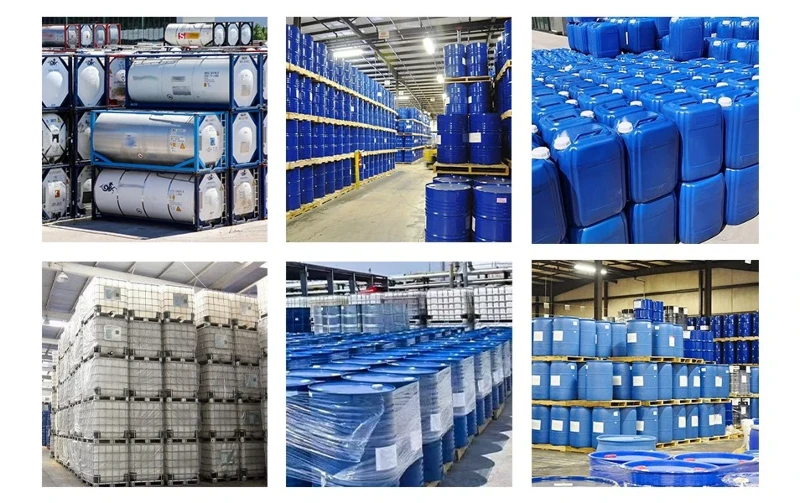
GNEE BIO Product Packaging
| Packaging Type | Net Weight |
|---|---|
| Galvanized steel drum | 180 kg (14.4 MT per 20' FCL) |
| IBC tank | On request |
| ISO tank | Bulk shipment |
Customer Visit
