

Your Professional Rubber And Plastics Manufacturer!
TIANJIN GNEE BIOTECH CO., LTD. is an enterprise integrating independent research and development, production, and sales. The factory is located in Henan Province, China and the factory covers an area of 3600 square meters. We have been engaged in veterinary and crop chemicals for more than ten years. We have a professional R&D team and will continue to develop new products to meet the market demand.


Why Choose Us
Complete Process System
GNEE BIO sells agricultural plant growth regulators, microbial fungicides, insecticides, and veterinary chemicals including antibiotics and various vaccines, among others.
Service
We are committed to providing high-quality materials to meet the needs of our customers in different industries.
Standardized Workshop
We have 3600 square meters of production area with professional equipment, specializing in the production of high content products.
Technical Team
The company has strong scientific research strength, a modern management system high-quality staff, and other absolute advantages.
Product Specifications
|
Product Name |
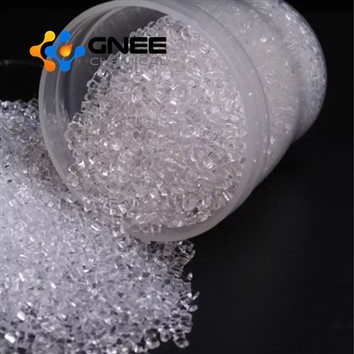
Polycarbonate |
|
CAS No. |
25037-45-0 |
|
EINECS No. |
0 |
|
Molecular formula |
C16H18O5 |
|
Appearance |
White Crystal |
|
Melting point |
220~230ºC |
|
Density |
1.2 g/mL at 25 °C(lit.) |
|
Refractive index |
N20/D 1.586 |
|
Solubility |
Chlorinated solvents: soluble |
|
Packing |
25kg/Bag |
Advantages of Rubber


Elasticity and Flexibility:
Rubber is highly elastic and flexible, allowing it to deform under stress and return to its original shape. This property makes rubber suitable for applications where resilience and flexibility are crucial, such as tires and seals.
Shock Absorption:
Rubber has excellent shock absorption properties, making it valuable for applications where impact resistance is important. It is commonly used in vehicle suspension systems, anti-vibration mounts, and industrial machinery.
Insulation Properties:
Rubber is an excellent electrical insulator, making it useful in the manufacturing of electrical components, insulating materials, and protective coatings.
Weather Resistance:
Rubber is resistant to weathering, UV radiation, and ozone, making it suitable for outdoor applications. It is commonly used in tires, seals, and other products exposed to the elements.
Chemical Resistance:
Rubber can resist the effects of many chemicals, oils, and solvents. This property makes it suitable for use in gaskets, hoses, and seals in chemical and industrial environments.
Water Resistance:
Natural and synthetic rubbers have inherent water-resistant properties, making rubber products suitable for use in wet or submerged conditions.
Durability:
Rubber is known for its durability and resistance to wear and tear. Rubber products, such as tires, conveyor belts, and industrial components, can withstand repeated use over an extended period.
Non-Slip Properties:
The natural grip and non-slip characteristics of rubber make it suitable for applications where slip resistance is important, such as footwear, mats, and flooring.
Tight Sealing:
Rubber's ability to conform to irregular surfaces and create a tight seal makes it valuable for applications like gaskets and O-rings, preventing leakage in various systems.
Biocompatibility:
Some types of rubber, such as medical-grade silicone rubber, are biocompatible and suitable for use in medical implants and devices.
Cost-Effectiveness:
Rubber is often a cost-effective material, especially in mass production processes. Its availability and ease of processing contribute to its economic advantages.
Noise Reduction:
Rubber's ability to absorb vibrations and dampen sound makes it useful in applications where noise reduction is important, such as in automotive components and machinery.
Versatility:
Rubber can be formulated and processed in various ways to meet specific application requirements. This versatility allows for the production of a wide range of rubber-based products for different industries.
Advantages of Plastics
Durability
Plastic is a highly durable material, making it ideal for various applications. It is resistant to water and many other chemicals, making it ideal for outdoor use and in high-traffic areas. It is also resistant to wear and tear, as you can use it repeatedly without losing its original shape or appearance.
01
Cost-effectiveness
Plastic is an inexpensive material, making it an excellent choice for making products in large quantities. Additionally, Plastic is so durable that it can be used more extensively than other materials, resulting in cost savings over time.
02
Lightweight
Plastic is lightweight, making it easy to transport and work. It is ideal for applications where weight is a factor, such as automotive or aerospace industries.
03
Versatility
Plastic can be molded into various shapes, sizes, and colors, making it an excellent choice for products you can customize for specific applications. Additionally, combine plastic with other materials to create products with different characteristics, such as increased strength or flexibility.
04
Safety
Plastic is a non-toxic material, making it an excellent choice for products that come into contact with food, drinks, or other consumables. Additionally, many types of plastic are flame-retardant, making them a great choice for applications where fire safety is a concern.
05
Application of Rubber
Tires: The majority of rubber produced is used in the manufacturing of tires for automobiles, trucks, motorcycles, bicycles, and other vehicles.
Automotive Components: Rubber is used in various automotive components such as hoses, belts, gaskets, seals, and anti-vibration mounts.
Industrial Belting: Rubber is used in conveyor belts, transmission belts, and power transmission belts in industrial settings.
Footwear: Rubber is commonly used in the production of shoe soles and outsoles due to its durability, flexibility, and non-slip properties.
Seals and Gaskets: Rubber is used to manufacture seals and gaskets for applications requiring water-tight or air-tight seals, such as in plumbing, automotive engines, and machinery.
Hoses and Tubing: Rubber hoses are widely used in various industries for transporting fluids, gases, and chemicals. They are common in automotive, industrial, and medical applications.
Sports Equipment: Rubber is used in the production of sports equipment such as balls, grips, and padding due to its resilience and shock-absorbing properties.
Consumer Goods: Rubber is found in various consumer products, including rubber bands, erasers, kitchen utensils, and household gloves.
Medical Devices: Medical-grade rubber is used in the manufacturing of medical devices such as gloves, tubing, catheters, and seals due to its biocompatibility.
Construction Materials: Rubber is used in the construction industry for items such as roofing materials, flooring, and seals due to its weather resistance and durability.
Electrical Insulation: Rubber is used as an insulating material in the electrical industry, including insulation for wires, cables, and electrical components.
Anti-Vibration Mounts: Rubber is used to create anti-vibration mounts and isolators in machinery and equipment to reduce vibrations and noise.
Rubberized Fabrics: Rubber is applied to fabrics to create waterproof and weather-resistant materials used in raincoats, boots, and outdoor gear.
Printing Rollers: Rubber rollers are used in printing presses to transfer ink to paper due to their elasticity and ability to conform to surfaces.
Adhesives and Sealants: Rubber-based adhesives and sealants are used in construction, automotive, and industrial applications for bonding and sealing.
Application of Plastics
Packaging
Plastics are a leading material for food packaging, containers, and films due to their ability to protect food, maintain freshness, and provide convenient storage. They are also used in packaging for consumer goods, pharmaceuticals, and industrial products.
Construction
Plastics are used in various construction applications, including pipes, gutters, windows, doors, and siding, as well as in flooring and insulation.
Textiles
Plastics are used in the production of stretchable fabrics, fleece, and other synthetic fibers. They are also used in the manufacturing of protective gear like helmets and pads.
Consumer Goods
Plastics are used in the production of a wide range of consumer products, including toys, tableware, toothbrushes, and household appliances.
Transportation
Plastics are used in the manufacturing of car parts, including bumpers, headlights, body panels, and interior components. They are also used in aircraft, trains, and ships.
Electronics
Plastics are used in the production of electronic devices like phones, computers, and televisions, as well as in the manufacture of components for these devices.
Industrial Machinery
Plastics are used in the production of industrial machinery components, bearings, gears, and other parts.
Medical Field
Plastics are used in the production of medical devices, including syringes, IV tubes, surgical gloves, and artificial limbs.
Rubber process
Incorporating chemical additives into a rubber base can produce rubber compounds with enhanced properties. These chemicals can either stabilize the polymer structure or enhance the strength of the rubber. Additionally, the compounding process can sometimes increase the rubber's elasticity, resulting in a lower final cost.
In a process akin to compounding, additives are blended with the rubber in this stage. To ensure proper distribution of ingredients and prevent overheating, skilled mixers carry out this procedure in two stages. First, people will prepare a masterbatch containing additives like carbon black. Once the rubber has cooled down, they introduce the required chemicals for vulcanization.
Manufacturers may utilize various shaping methods such as coating, extrusion, casting, calendering, and molding to produce a wide range of products. The choice of shaping technique depends on the specific requirements of the final product.
To enhance its durability and strength, rubber undergoes a thermal treatment known as vulcanization. This process involves heating the rubber, often with sulfur, to create additional bonds between the molecules, making them less prone to separation. Following vulcanization, any defects are removed, and the rubber is shaped or molded into the desired product.

Material preparation: The first step in plastic production is to prepare the raw materials. These raw materials are mainly petrochemical products such as ethylene and propylene. These materials must be cleaned and processed to remove impurities. Afterwards, they must be refined before they can be used in plastic production.
Polymerization: Once the raw materials are ready, polymerization occurs. This is a chemical process that converts small molecules (monomers) into long-chain polymers. The polymerization process is achieved by heating the raw materials in the presence of a catalyst. The catalyst helps to link the molecules into chains. The resulting resin is the basis for making plastics.
Additives: After polymerization, various additives are mixed with the resin. They give the plastic the desired properties, such as color, stability, and flexibility. They also enhance the plastic's heat resistance and UV resistance. Common additives include colorants, stabilizers, plasticizers, and flame retardants.
Molding: The next step is molding, which is to form the plastic into the desired shape.
There are several molding techniques: injection molding, blow molding, and thermoforming. The specific molding technique you choose depends on the type of plastic, the complexity of the part, and the output.
Injection molding: The molten plastic is injected into the mold and cooled to solidify.
Blow molding: Air pressure molds molten plastic into a hollow shape.
Thermoforming: Plastic sheets are heated until they are pliable and then formed over a mold.
Finishing: The final stage of plastic manufacturing is finishing. It involves removing excess material from the molded product. Final touches such as labeling or packaging are then applied. The finished product is ready for distribution.
Packaging & Delivery


Our Certificates


FAQ
We're well-known as one of the leading rubber and plastics manufacturers and suppliers in China. Be free to buy high-grade rubber and plastics for sale here from our factory. Quality products and low price are available.