

MEG Monoethylene Glycol (CAS 107-21-1) is a key raw material in the field of polyester manufacturing, as it reacts with Purified Terephthalic Acid (PTA) or Dimethyl Terephthalate (DMT) to produce Polyethylene Terephthalate (PET). These polymeric materials are widely utilized in the manufacture of textiles, packaging products, and various industrial materials.
What Is MEG (Monoethylene Glycol)?
MEG (Monoethylene Glycol) is a colorless, hygroscopic, and low-volatility organic compound belonging to the diol family. Its molecular structure features two hydroxyl (-OH) functional groups, which endow it with exceptional chemical reactivity in esterification and polycondensation reactions. The chemical formula for MEG is C₂H₆O₂, and its CAS number is 107-21-1.
Are Ethylene Glycol and Monoethylene Glycol the Same?
Yes, they are exactly the same compound. "Monoethylene glycol" is simply its precise chemical name, intended to distinguish it from related multi-unit compounds such as diethylene glycol (DEG) or triethylene glycol (TEG).

Basic Chemical Information
| Chemical Name | Mono ethylene glycol |
| CAS Number | 107-21-1 |
| Molecular Formula | C₂H₆O₂ |
| Molecular Weight | 62.07 g/mol |
| Appearance | Clear, colorless liquid |
| Boiling Point | 197.3°C |
| Freezing Point | -12.9°C |
| Solubility | Completely miscible with water |
Manufacturing Process
MEG Monoethylene Glycol chemical serves as key raw material for polyester fiber, resin and antifreeze products, manufactured chiefly through ethylene oxidation and subsequent hydration reaction.
1. Ethylene Oxidation
Ethylene gas undergoes catalytic oxidation with oxygen under silver oxide catalyst, at 200-300℃ and 10-30 atm to yield ethylene oxide. Strict parameter control prevents undesirable over-oxidation.
2. Ethylene Oxide Hydration
Hydration proceeds in acidic medium at 50-70℃ and 1-3 atm. The reaction generates MEG, alongside DEG and TEG as secondary by-products.
3. Separation and Purification
Distillation technology isolates qualified MEG from mixed substances. Separated by-products are recycled for other industrial utilization.
4. Quality Inspection and Packaging
Finished products pass standardized quality verification, then undergo cooling, packaging and warehousing for market circulation.
MEG production features high energy consumption. Bio-based ethylene materials are increasingly adopted to produce sustainable bio-MEG and lower dependence on petrochemical resources.
Why Is MEG mono ethylene glycol Used in Polyester Production?
Mono ethylene glycol is key to polyester manufacturing because it reacts efficiently with PTA or DMT to form the ester linkages that build PET polymer chains.
The core process includes three steps:
- Esterification/transesterification
- Polycondensation
- Molecular chain growth
In the simplified reaction:
nHOCH2CH2OH+nHOOC−C6H4−COOH→[−OCH2CH2OCOC6H4CO−]n+2nH2O
- MEG provides hydroxyl groups
- Terephthalic acid provides carboxylic acid groups
- Their repeated condensation forms PET polymer chains
Monoethylene Glycol possesses a symmetrical difunctional structure, making it an ideal raw material for the production of high-strength, linear polyester polymers.
Why MEG glycol ideal for PET Manufacturing
Bifunctional Molecular Structure:
MEG (HO-CH₂-CH₂-OH) has two reactive hydroxyl groups. Its simple, symmetrical structure enables it to react at both ends during polymerization, supporting efficient chain extension and high-molecular-weight polymer formation.
This is critical for PET's fiber strength, melt viscosity, thermal stability, and mechanical performance.
High Reactivity with PTA & DMT:
MEG glycol reacts efficiently with purified terephthalic acid (PTA) and dimethyl terephthalate (DMT). This delivers faster esterification, controlled polymer growth, fewer byproducts, and efficient large-scale processing.
Its small molecular size also improves diffusion and reaction kinetics in polyester reactors.
Thermal and Mechanical Stability
Polyesters synthesized with MEG exhibit balanced properties such as:
| Property | Benefit |
|---|---|
| Tensile strength | Durable fibers and plastics |
| Thermal resistance | Stable processing temperatures |
| Dimensional stability | Reduced deformation |
| Chemical resistance | Longer service life |
| Processability | Easier extrusion and molding |
CAS 107-21-1 MEG Raw Material Supplier in China
Role in Polyester Production
Monoethylene glycol (MEG) serves as a critical foundational raw material in the polyester manufacturing process. Through a polycondensation reaction, it combines with terephthalic acid to form long-chain polymers.
- Polyester Fibers: Molten PET is extruded through spinnerets to form fibers, which are subsequently used in the production of textiles and apparel.
- PET Plastics: It can be processed into PET resin, which is widely utilized in the manufacturing of plastic bottles, packaging films, and food containers.
Other Application Areas:
Although polyester production remains the largest global application sector for MEG, it also plays a vital role in the following areas:
- Antifreeze and Coolants: Due to its low freezing point and high boiling point, MEG is an indispensable component in automotive engine cooling systems.
- De-icing Fluids: It is used to formulate aircraft de-icing solutions as well as for de-icing treatments on airport runways.
- Industrial Intermediates: It serves as a raw material for the production of various products, including resins, plasticizers, and hydraulic fluids.
About us
As a leading manufacturer and exporter of chemical solvent, TIANJIN GNEE BIOTECH CO., LTD. provides high-quality industrial chemicals. We supply to customers across the chemical, pharmaceutical, and materials industries, ensuring consistent quality, reliable logistics, and professional technical support.
Our chemical products hold international certifications (REACH, ISO, FMQS, HALAL) for global quality recognitio. We have warehouses in coreports such as Qingdao, Tianiin, and Shanghai, with a 15-day express delivery service.
Other Hot-Selling Products
| Dimethyl Sulfoxide (DMSO) | CAS 67-68-5 |
| Dichloromethane / Methylene Chloride | CAS 75-09-2 |
| Glacial Acetic Acid / Ethanoic Acid | CAS 64-19-7 |
| Ethyl Acetate / Ethyl Ethanoate | CAS 141-78-6 |
| Ethylene Glycol / Monoethylene Glycol (MEG) | CAS 107-21-1 |
| Trichloroethylene | CAS 79-01-6 |
| Cyclohexanone | CAS 108-94-1 |
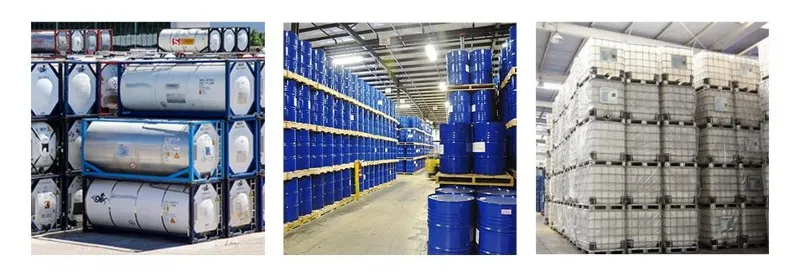
GNEE BIO Product Packaging
| Packaging Type | Net Weight |
|---|---|
| Steel Drum | 250 kg |
| IBC Tank | 1250 kg |
| ISO Tank | Bulk shipment |
Customer Visit
