

Ethylene Glycol (MEG) is a vital compound with extensive applications across the industrial sector. Among its numerous uses, MEG is particularly critical to the textile and automotive industries. Thanks to its versatility and unique chemical properties, it has become an indispensable raw material in the production of fibers, fabrics, and engine fluids, making significant contributions to the efficiency, durability, and sustainability of these industries.
Despite its widespread application in the industrial sector, many purchasers, warehouse personnel, and chemical distributors still raise a critical safety question: Is ethylene glycol flammable?
The answer is: Under specific conditions, ethylene glycol is indeed combustible; however, it is not classified as a highly flammable liquid-unlike substances such as isopropyl alcohol or gasoline.
What Is Ethylene Glycol chemical (CAS 107-21-1)?
Ethylene glycol also known as MEG monoethylene glycol is a dihydric alcohol with the molecular formula: HOCH2CH2OH
It is a colorless, odorless, hygroscopic liquid with a sweet taste and low volatility.
| Chemical Name | Ethylene Glycol/EG |
| CAS Number | 107-21-1 |
| Molecular Formula | C₂H₆O₂ |
| Molecular Weight | 62.07 g/mol |
| Appearance | Clear colorless liquid |
| Boiling Point | 197.3°C |
| Freezing Point | −12.9°C |
| Flash Point | Approximately 111°C |
| Autoignition Temperature | Approximately 398°C |
| Water Solubility | Completely miscible |

Is Ethylene Glycol Chemical Flammable?
CAS 107-21-1 Ethylene glycol is combustible with a flash point of approximately 111°C (232°F). It has explosive limits of 3.2-15.3% by volume in air. When heated, it can explosive form vapor-air mixtures and produce toxic gases during combustion. The National Fire Protection Association (NFPA) classifies it with a flammability rating of 1, meaning it "must be preheated before ignition can occur".
Flammability Characteristics:
| Characteristic | Details |
|---|---|
| Flash Point (Closed Cup) | 111 °C (232 °F) |
| Autoignition Temperature | 398–410 °C (748–770 °F) |
| Flammability Classification (NFPA 704) | Flammability rating: 1 (Must be preheated before ignition can occur) |
| Explosive Limits (in air, by volume) | Lower explosive limit (LEL): 3.2%Upper explosive limit (UEL): 15.3% |
| Combustion Behavior | Combustible liquid; not classified as "highly flammable" under standard transport regulations. Burns with a pale blue flame, producing toxic byproducts like carbon monoxide. |
Is ethylene glycol explosive?
Under normal storage and handling conditions, it is not classified as an explosive substance.
However, under specific hazardous circumstances, it may pose fire and explosion risks, including:
- Heated, enclosed storage tanks
- Accumulation of ethylene glycol vapors
- Ethylene glycol droplets in an atomized state
- Contaminated storage containers
- Poorly ventilated spaces
Under high-temperature conditions, ethylene glycol vapors can mix with air to form a flammable mixture; if exposed to an ignition source, this may trigger combustion or an explosion.
Storage Conditions for Ethylene Glycol chemical (CAS 107-21-1)
Environment & Temperature
Temperature control: Ideally store below 40°C (104°F) and above its freezing point to prevent degradation and excessive vapor loss.
Ventilation: Keep the storage area well-ventilated to prevent dangerous vapor buildup.
Moisture control: Ethylene glycol is hygroscopic, so keep containers fully sealed and store in a dry space to avoid dilution and contamination.
Light protection: Shield the product from direct sunlight to avoid heat buildup and accelerated degradation.
Material & Safety
Incompatible materials: Keep ethylene glycol separated from strong oxidizing agents, strong acids, strong bases, and aldehydes.
Ignition sources: Store away from open flames, hot surfaces, and sparks to avoid fire or explosion risks.
Container integrity: Use properly labeled, corrosion-resistant, tightly sealed containers. Inspect them regularly for leaks or damage.
CAS 107-21-1 MEG Raw Material Supplier in China
Ethylene Glycol MEG chemical: Handling Precautions
Personal Protective Equipment (PPE)
Operators must wear appropriate protective equipment. During routine operations, it is mandatory to wear chemical-resistant gloves, safety goggles, and protective clothing. When performing liquid transfer operations, a face shield must also be worn.
When working in environments involving heating equipment or within confined spaces, respiratory protection devices should be readily available. Additionally, it is recommended to periodically monitor airborne vapor concentrations.
Emergency Response for Spills
All minor spills must be contained immediately. Use inert absorbent materials to soak up the spilled liquid, preventing it from entering the sewer system, and collect the residue in a properly sealed container.
Large-scale spills pose multiple risks. The spilled liquid not only creates a severe slip hazard for personnel and causes environmental contamination, but-if present in a high-temperature environment-it may also present a fire hazard.
Please note that accidental ingestion of ethylene glycol chemical poses a toxic hazard to both humans and animals.
Key Hazards of Ethylene glycol liquid
| Hazard Type | Risk |
|---|---|
| Ingestion toxicity | High |
| Skin irritation | Moderate |
| Eye irritation | Moderate |
| Aquatic oxygen depletion | Possible |
| Fire hazard when heated | Moderate |
Conclusion
Under normal ambient temperature and pressure conditions, ethylene glycol (CAS 107-21-1) is not classified as a highly flammable substance; however, as a combustible chemical, it can still ignite if heated to a sufficient temperature.
Although its relatively high flash point renders it safer than many industrial solvents, fire hazards may still arise in situations involving high temperatures, vapor accumulation, mist formation, or inadequate ventilation.
To ensure the safe management of ethylene glycol chemical liquid in industrial settings, it is imperative to strictly implement appropriate measures regarding storage, handling, ventilation, spill control, and fire prevention. A thorough understanding of its combustion characteristics constitutes a critical component of effective chemical safety management.
About us
As a leading manufacturer and exporter of chemical solvent, TIANJIN GNEE BIOTECH CO., LTD. provides high-quality industrial chemicals. We supply to customers across the chemical, pharmaceutical, and materials industries, ensuring consistent quality, reliable logistics, and professional technical support.
Our chemical products hold international certifications (REACH, ISO, FMQS, HALAL) for global quality recognitio. We have warehouses in coreports such as Qingdao, Tianiin, and Shanghai, with a 15-day express delivery service.
Other Hot-Selling Products
| Dimethyl Sulfoxide (DMSO) | CAS 67-68-5 |
| Dichloromethane / Methylene Chloride | CAS 75-09-2 |
| Glacial Acetic Acid / Ethanoic Acid | CAS 64-19-7 |
| Ethyl Acetate / Ethyl Ethanoate | CAS 141-78-6 |
| Ethylene Glycol / Monoethylene Glycol (MEG) | CAS 107-21-1 |
| Trichloroethylene | CAS 79-01-6 |
| Cyclohexanone | CAS 108-94-1 |
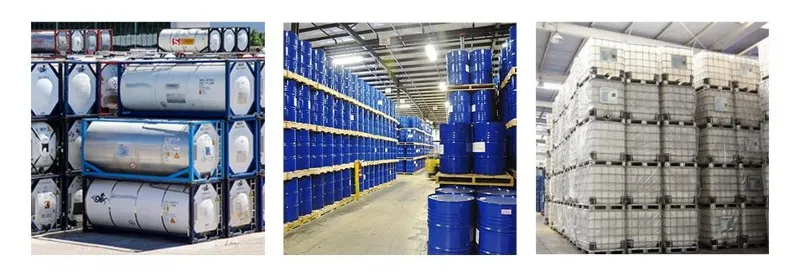
GNEE BIO Product Packaging
| Packaging Type | Net Weight |
|---|---|
| Steel Drum | 250 kg |
| IBC Tank | 1250 kg |
| ISO Tank | Bulk shipment |
Customer Visit
