


CAS 75-09-2 Dichloromethane (DCM) is a moderately polar molecule. This moderate polarity is what makes DCM a highly versatile solvent in both laboratory and industrial applications.
If you work in pharmaceuticals, analytical chemistry, or manufacturing, understanding the polarity of DCM chemical is important.
What Is Dichloromethane (DCM)?
Dichloromethane (CAS 75-09-2), also called methylene chloride, methylene dichloride, or simply DCM, is a haloalkane solvent with the molecular formula CH₂Cl₂. The molecule consists of one central carbon atom bonded to two hydrogen atoms and two chlorine atoms through single covalent bonds.
Classified as a dihalomethane, DCM is a colorless, volatile liquid with a characteristic sweet, chloroform-like odor.
Molecular Structure of DCM:
Tetrahedral Geometry
DCM has a tetrahedral molecular geometry, with the carbon atom at the center bonded to:
- Two hydrogen atoms
- Two chlorine atoms
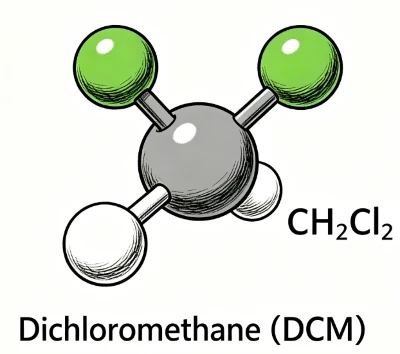
However, molecular geometry alone does not determine polarity. The key factor is whether the surrounding atoms are identical or different.
For comparison:
- CCl₄ (carbon tetrachloride): symmetrical → dipoles cancel → nonpolar
- CH₂Cl₂ (DCM): asymmetric substitution → dipoles do not cancel → polar
Dichloromethane (DCM) is a polar aprotic solvent
CAS 75-09-2 Dichloromethane is classified as a polar aprotic solvent. "Aprotic" means that the molecule lacks O-H or N-H bonds, and therefore cannot provide hydrogen bonds. Dichloromethane's moderate polarity is the reason for its wide application across various industries. It can dissolve both polar and nonpolar compounds.
It can dissolve the following substances:
- Organic polymers and resins
- Fats, oils, and waxes
- Alkaloids and natural products
- Many pharmaceutical compounds
- Adhesives and coatings
Methylene chloride is precisely because of its wide solubility range that dichloromethane is often referred to as a "universal solvent" in many laboratory and industrial environments.
CAS 75-09-2 Dichloromethane Uses in Industry
Key Physical Properties of DCM
| Property | Value |
|---|---|
| Molecular formula | CH₂Cl₂ |
| CAS number | 75-09-2 |
| Molecular weight | 84.93 g/mol |
| Boiling point | ~39.6°C |
| Melting point | -97°C |
| Density | 1.325 g/mL (25°C) |
| Vapor density | ~2.9 (air = 1) |
| Water solubility | ~20 g/L |
| Dielectric constant | ~9.1 |
| Dipole moment | ~1.60 D |
| Flash point | None (non-flammable under normal conditions) |
Industrial and Laboratory Applications of DCM Solvent
1. Pharmaceutical Manufacturing
Dichloromethane DCM solvent is widely used in:
- API purification via chromatography
- Recrystallization of active pharmaceutical ingredients
- Reaction workup and impurity removal
- Natural product extraction
Its low boiling point allows gentle removal without degrading heat-sensitive compounds.
2. Laboratory and Analytical Chemistry
Methylene chloride is commonly used for:
- TLC and column chromatography
- Sample preparation
- Organic synthesis reactions
- Glassware cleaning for organic residues
Note: In NMR applications, deuterated DCM (CD₂Cl₂) is used rather than standard DCM.
3. Industrial Processing Applications
- Paint and coating removal (industrial use)
- Metal degreasing and cleaning
- Adhesive and resin processing
- Industrial solvent formulations
(Some historical aerosol applications have declined due to regulatory restrictions.)
4. Food Processing (Historical Use)
DCM was previously used in coffee decaffeination due to its ability to selectively extract caffeine and its low boiling point, which allows easy removal. Today, its use in food processing has significantly declined, with alternatives like supercritical CO₂ extraction becoming more common.
Frequently Asked Questions
Q: Can dichloromethane dissolve in water?
DCM has limited water solubility-approximately 20 g/L at 20°C. It's not miscible with water like ethanol or acetone, but it does dissolve to a small extent. For liquid-liquid extraction, this partial solubility is actually beneficial because it allows compound partitioning between phases.
Q: Is methylene chloride Liquid flammable?
Methylene chloride is generally considered non-flammable at room temperature and normal working conditions. It has no standard flash point and does not readily ignite. However, at very high temperatures (above 100°C), DCM vapor can form explosive mixtures with air, and its autoignition temperature is 556°C.
Q: Is DCM chemical banned?
DCM is not universally banned, but its use is increasingly restricted. The 2024 EPA TSCA rule drastically lowered workplace exposure limits. Additionally, some consumer uses (like paint strippers for residential use) have been banned or restricted in the U.S. and EU. Industrial and laboratory uses continue but require stricter controls.
Conclusion
Dichloromethane is a moderately polar, polar aprotic solvent with a unique balance of properties. Its intermediate polarity, combined with volatility and density, makes it extremely useful in chemical synthesis, extraction, and industrial processing.
About Gneebio
Established in 2016 and a subsidiary of GNEE Group, Gneebio is a Chinese company specializing in the supply and export of high-purity organic solvents, petrochemicals, and pharmaceutical raw materials.
We provide a complete set of export compliance documents for every batch of products, including Certificates of Analysis (COA), Material Safety Data Sheets (MSDS), and Technical Data Sheets (TDS).
Email: sales@gneebio.com
Send inquiry for: price / sample / COA / bulk order / CIF quote
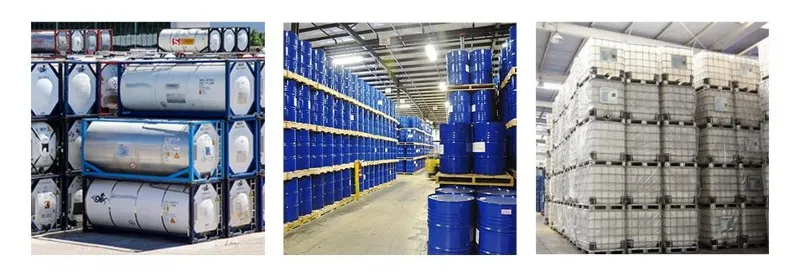
Customer Visit
