


Dichloromethane (DCM), also known as methylene chloride (CAS 75-09-2), is a moderately polar, volatile chlorinated solvent widely used in chemical manufacturing, pharmaceutical processing, extraction, metal cleaning, and laboratory applications.
What Is Dichloromethane DCM CAS No.75-09-2?
Dichloromethane (DCM), also widely known as methylene chloride, is a clear, colorless, volatile organochlorine liquid with a mild, sweet, ether-like odor. CAS number 75-09-2, its chemical formula is CH₂Cl₂. It is highly valued in industrial and laboratory chemistry as a powerful solvent due to its low flammability, high volatility, and capability to dissolve a broad range of organic compounds.
Basic information
- Common names: Dichloromethane, methylene chloride, methylene dichloride
- Standard abbreviation: DCM
- CAS No.: 75-09-2
- Molecular formula: CH₂Cl₂
- Chemical class: Haloalkane (dihalomethane)
At room temperature, DCM is a colorless, highly volatile liquid with a characteristic mild, sweet odor similar to chloroform. While trace amounts occur naturally from volcanic activity, marine algae and wetland emissions, more than 99% of commercial DCM is produced via industrial chlorination processes.
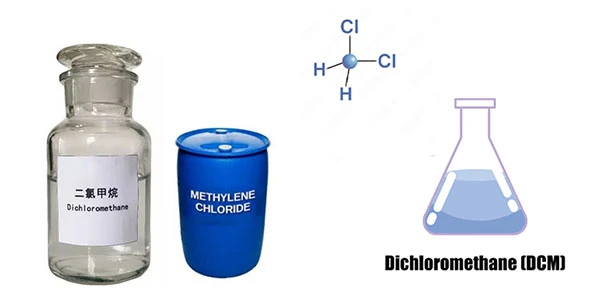
GNEE BIO supplies high-purity dichloromethane (DCM) for industrial processing, pharmaceutical extraction and laboratory applications, with consistent quality control and export documentation support.
Related product: Industrial Grade Dichloromethane (DCM)/Methylene Chloride CAS 75-09-2 High-Purity Solvent
Molecular Structure and Polarity
The dichloromethane molecule consists of a central carbon atom bonded to two hydrogen atoms and two chlorine atoms. The carbon atom is sp³ hybridized, giving the molecule a tetrahedral geometry with bond angles close to 109.5°.

Is Dichloromethane DCM Polar?
Yes. DCM is classified as a moderately polar aprotic solvent. The polarity results from the difference in electronegativity between carbon, hydrogen, and chlorine atoms. Because the molecular geometry does not completely cancel the individual bond dipoles, it possesses a net dipole moment.
Its moderate polarity allows it to dissolve a wide range of organic compounds, including both polar and nonpolar substances. As an aprotic solvent, DCM CAS 75-09-2 does not donate protons and is commonly used in organic synthesis, extraction procedures, and reaction workups.
What Are the Physical and Chemical Properties of DCM?
Key Physical Properties
| Appearance | Colorless Liquid |
| Odor | Mild Sweet Odor |
| Molecular Weight | 84.93 g/mol |
| Melting Point | -96.7°C |
| Boiling Point | 39.6°C |
| Density (20°C) | 1.326 g/cm³ |
| Water Solubility (25°C) | 13–20 g/L |
| Vapor Pressure (20–25°C) | 47–58 kPa |
| Flash Point | None (Non-flammable under normal conditions) |
| Solvent Type | Moderately Polar Aprotic |
Chemical Reactivity and Stability
- Room temperature stability: Chemically inert under normal handling conditions; does not hydrolyze readily in neutral water.
- Thermal decomposition: Decomposes at high temperatures to release toxic gases including phosgene (COCl₂) and hydrogen chloride (HCl).
- Flammability: Not classified as highly flammable, but vapors can form explosive mixtures with air at high concentrations and in the presence of strong oxidizers.
- Reagent compatibility: Generally stable toward dilute acids and bases; however, it may undergo nucleophilic attack and degradation under strongly basic conditions or with strong nucleophiles.
How Is Dichloromethane Produced Industrially?
Commercial dichloromethane is manufactured primarily through the chlorination of methane or methyl chloride at temperatures between 400°C and 500°C.
The process produces several chlorinated methane derivatives:
CH₄ → CH₃Cl → CH₂Cl₂ → CHCl₃ → CCl₄
The resulting mixture is separated through fractional distillation, with dichloromethane recovered based on its relatively low boiling point.
What Are the Applications of Dichloromethane DCM solvent?
1. Pharmaceutical and Natural Product Extraction
Standard solvent for extracting active pharmaceutical ingredients (APIs) and plant alkaloids from raw biomass.
Historically the dominant solvent for coffee and tea decaffeination. Modern food-grade applications are strictly regulated to ensure residual solvent levels meet food safety standards.
2. Paint and Coating Removal
Highly effective at penetrating and breaking polymer bonds in paint, varnish and coatings; a core ingredient in industrial paint strippers and graffiti removers.
Consumer and most commercial paint-stripping uses have been banned or phased out in multiple jurisdictions due to occupational health risks.
3. Organic Chemical Manufacturing
Workhorse solvent for organic synthesis, particularly for SN2 reactions, Grignard reaction workups and phase-transfer catalysis.
Used in the production of polyurethane foams, agrochemicals and photographic film materials.
4. Metal Degreasing and Precision Cleaning
Dichloromethane is used in vapor degreasing systems to remove oils, greases and processing residues from precision metal parts in the aerospace, automotive and electronics industries.
5. Analytical and Research Laboratories
Routine solvent for liquid-liquid extraction, high-performance liquid chromatography (HPLC) sample preparation and general organic chemistry procedures.
Preferred for applications requiring fast solvent evaporation and minimal thermal stress on analytes.
Related articles: High-Purity Dichloromethane (DCM) CAS 75-09-2 for Industrial, Pharmaceutical Applications
Global Regulatory Status
United States: 2024 EPA TSCA Final Rule
In April 2024, the U.S. Environmental Protection Agency (EPA) issued its final risk management rule for dichloromethane under the Toxic Substances Control Act (TSCA), representing the strictest federal regulation of DCM to date. The rule took effect on July 8, 2024.
Key provisions:
- Prohibited uses: Most consumer and commercial applications including paint stripping, general degreasing and adhesive removal are banned.
- Permitted uses: Laboratory research use remains allowed, subject to strict exposure controls.
- Revised exposure limits: The rule establishes significantly lower workplace exposure limits compared to previous Cal/OSHA standards:
China Regulatory Requirements
China has strengthened environmental management requirements for dichloromethane through pollution-control and occupational-safety regulations.
Key restrictions include:
- Prohibition of DCM-containing cosmetic products.
- Restrictions on certain paint stripper formulations.
- Emission control requirements for chemical manufacturing facilities.
- Enhanced workplace exposure management requirements.
GNEE BIO supports customers with documentation and compliance information required for DCM shipments under applicable regulations.
Safe Handling and Storage
Personal Protective Equipment (PPE)
Appropriate personal protective equipment (PPE) should be used when handling dichloromethane to minimize the risk of exposure. Recommended PPE includes:
- Chemical splash goggles and protective clothing to prevent skin contact with the solvent.
- Organic vapor respirator.
- Dichloromethane-resistant gloves.
Engineering Controls
Engineering controls are essential for reducing exposure to airborne contaminants and maintaining a safe working environment. Recommended measures include:
- Certified chemical fume hoods.
- Closed handling systems to reduce solvent emissions.
- Local exhaust ventilation systems.
- Routine air monitoring programs to verify compliance with occupational exposure limits.
Storage Requirements
Dichloromethane solvent should be stored under controlled conditions to maintain product quality and minimize safety risks. Recommended storage practices include:
- Keep containers tightly sealed.
- Store the product in a cool, dry, and well-ventilated area.
- Maintain storage temperatures below 40°C whenever possible.
- Keep the substance away from oxidizing agents and other reactive chemicals.
Spill Response
In the event of a minor spill, use inert materials such as sand or vermiculite to absorb the liquid, then collect it for proper disposal.
In the event of a major spill, implement emergency response procedures immediately. Appropriate measures include:
- Evacuate non-essential personnel from the affected area.
- Increase ventilation and control vapor accumulation.
- Follow established hazardous materials emergency response protocols.
All waste dichloromethane (including contaminated absorbent and cleanup materials) must be disposed of in accordance with applicable local hazardous waste regulations.
Bulk Procurement Guide for DCM
Available Specifications
| Grade | Typical Application |
| Industrial Grade (≥99.5%): | Cleaning, coatings, chemical processing |
| High Purity Grade (≥99.9%): | API extraction |
| Laboratory grade (≥99.95%): | HPLC and organic synthesis research |
Packaging Options
| Packaging | Application |
| Steel Drum | Standard export shipment |
| IBC Tank | Bulk industrial users |
| ISO Tank | Large-volume transportation |

GNEE BIO Documentation Support
- COA
- SDS/MSDS
- TDS
- Packing List
- Certificate of Origin
- Export documents
Frequently Asked Questions (FAQ)
Q: Is dichloromethane polar or non-polar?
A: Dichloromethane has moderate polarity. Its tetrahedral structure does not fully cancel out the dipole moments generated by the two polar C–Cl bonds, resulting in a net molecular dipole moment. It is classified as a polar aprotic solvent.
Q: Is dichloromethane liquid miscible with water?
A: No. DCM has low solubility in water (approximately 20 g/L at 25 °C) and, due to its high density, forms a distinct bottom layer. This property makes it widely used in liquid-liquid extraction processes.
Q: Is DCM flammable?
A: Under normal conditions, dichloromethane is generally classified as non-flammable, although its decomposition products can be hazardous at high temperatures.
Q: Why is dichloromethane widely used as a solvent?
A: Its combination of moderate polarity, broad solvency, low boiling point, and ease of removal makes it an excellent choice for industrial and laboratory applications.
Conclusion
CAS No.75-09-2 Dichloromethane/methylene chloride remains one of the world's most important industrial solvents. Its excellent solvency, moderate polarity, low boiling point, and versatility support applications ranging from pharmaceutical extraction and chemical manufacturing to metal cleaning and laboratory research.
Despite its performance advantages, DCM presents significant health and environmental risks. As regulations continue to tighten globally, manufacturers and end users must adopt appropriate engineering controls, exposure monitoring programs, and safe handling procedures to ensure compliance and worker protection.
About GNEE BIO
Established in 2016 and a subsidiary of GNEE Group, GNEE BIO is a Chinese company specializing in the supply and export of high-purity organic solvents, petrochemicals, and pharmaceutical raw materials.
We provide a complete set of export compliance documents for every batch of products, including Certificates of Analysis (COA), Material Safety Data Sheets (MSDS), and Technical Data Sheets (TDS).
Email: sales@gneebio.com
Send inquiry for: price / sample / COA / bulk order / CIF quote

