


For decades, Dichloromethane or methylene chloridehas been regarded as one of the most effective solvents for paint removal and coating stripping applications. Its fast action and broad compatibility with coating systems made it a preferred choice across industries. However, significant health risks and increasingly strict regulations have dramatically reduced its use. Whether you're an industrial procurement manager, a facilities engineer, or simply researching solvent regulations, this guide explains why DCM was so widely used, the risks involved, and what alternatives are available today.
- Related Product: Industrial Grade Dichloromethane (DCM)/Methylene Chloride CAS 75-09-2 High-Purity Solvent

Why Is Dichloromethane (DCM) Used in Paint Strippers?
CAS No.75-09-2 Dichloromethane works well as a paint stripper because of several measurable physical and chemical properties. It has a small molecular size, moderate polarity, low boiling point, and strong ability to penetrate and swell many polymer films. These properties let it move into the coating layer, weaken the bond between the paint and the substrate, and help the coating lift off.
Key Performance Advantages
1. Rapid Action
Methylene Chloride has a low boiling point of about 39.6°C and a high vapor pressure at room temperature, so it evaporates quickly and can concentrate at the coating surface during use. At the same time, its solvent action begins as soon as it contacts the paint film, so many coatings start to soften within 15–30 minutes. By comparison, benzyl alcohol and dibasic ester formulations usually have higher boiling points and lower evaporation rates, so they often need several hours to work through the same coating layers.
2. Multi-Layer Penetration
Dichloromethane DCM molecules are small and have low viscosity, which allows them to move through cracks, pores, and edges in aged paint films. Once inside the coating stack, it can diffuse between layers and swell the polymer network. That swelling reduces adhesion between layers and between the coating and the substrate, so several layers can loosen at the same time.
3. Broad Compatibility
DCM chemical can remove many coating types because it can interact with a range of resin systems, including:
- Polyurethane coatings
- Epoxy coatings
- Alkyd paints
- Acrylic paints
- Lacquers
- Traditional oil-based coatings
This works because DCM (CAS 75-09-2) has a solvent polarity that allows it to dissolve or swell many organic binders used in paints and industrial finishes. Coatings with different resin structures respond differently, but DCM can affect a wider range of them than many single-purpose solvents.
4. Low Viscosity and High Volatility
DCM liquid has low viscosity, so it can flow into detailed surfaces, seams, corners, and other hard-to-reach areas. It also has high volatility, which means it evaporates quickly after application.
5. Non-Flammable Characteristics
Methylene chloride does not ignite easily under normal conditions because it has a high vapor density and does not support combustion the way many hydrocarbon solvents do.
Physical Properties Of DCM chemical
| Property | Value |
| Appearance | Clear, colorless liquid |
| Odor | Sweet, chloroform-like |
| Molecular Weight | 84.93 g/mol |
| Density (20°C) | 1.32–1.33 g/cm³ |
| Melting Point | -97°C |
| Boiling Point | 39.6–40°C |
| Vapor Pressure (25°C) | Approx. 440 mmHg |
| Water Solubility | Slightly soluble |
| Flash Point | Non-flammable under normal conditions |
| Dielectric Constant | 9.1 |
| Refractive Index | 1.424 |
- Related Article: CAS 75-09-2 DCM Dichloromethane: Formula, Structure, Properties
The Safety Concerns of Dichloromethane Chemical
Despite its performance advantages, DCM presents significant health hazards that eventually led regulators worldwide to restrict its use.
1. Acute Toxicity:
One of the most concerning aspects of DCM exposure is that the human body metabolizes part of the absorbed solvent into carbon monoxide.
This creates several unique hazards:
- Exposure may not immediately trigger strong warning signs.
- Carbon monoxide formation can reduce the blood's oxygen-carrying capacity.
- Symptoms may include dizziness, headache, confusion, nausea, and impaired coordination.
- High exposures can result in unconsciousness, respiratory depression, cardiac complications, and death.
- Fatal exposures have been reported in poorly ventilated and confined spaces, sometimes occurring within a relatively short period of time after exposure.
U.S. health agencies have documented dozens of fatalities associated with methylene chloride-containing paint strippers, particularly in confined-space applications such as bathtub refinishing and industrial maintenance work.
2. Chronic Health Effects
Repeated or long-term exposure may be associated with:
- Liver toxicityNeurological effects
- Cognitive impairment
- Skin irritation and dermatitis
- Increased cardiovascular stress due to carbon monoxide formation
Several regulatory agencies, including the U.S. EPA and international health organizations, classify methylene chloride as a potential or probable human carcinogen based on available evidence.
Workers involved in paint stripping, furniture refinishing, and industrial maintenance historically experienced the highest occupational exposure levels.

methylene chloride Regulatory Status: What's Banned and What's Still Allowed?
In the United States, dichloromethane can still be used only in limited, highly regulated applications such as certain aerospace, defense, laboratory, and closed-system industrial operations. For consumer use and most commercial paint stripping, the answer is no.
If your operation does not fall under a specific exemption and cannot meet strict exposure controls, DCM should not be used. In most cases, a safer alternative is the better choice.
| Use Category | Status |
|---|---|
| Consumer paint stripping | Prohibited |
| Most commercial paint stripping | Restricted or prohibited |
| Aerospace maintenance | Limited permitted uses |
| Defense and national security applications | Limited permitted uses |
| Certain industrial closed-system operations | Limited permitted uses |
| Laboratory and research applications | Permitted under specific conditions |
The European Union prohibited the sale of methylene chloride-based paint strippers to the general public and most professional users in 2012.
California's Department of Toxic Substances Control (DTSC) has also identified methylene chloride-containing paint strippers as a priority product for safer alternatives evaluation.
Which Industries Still Use DCM Paint Strippers?
Although most applications have been phased out, DCM is still used under strict regulatory controls in aerospace maintenance, industrial metal finishing, and specialized restoration projects.
1. Aerospace and Aircraft Maintenance
Aircraft coatings are engineered for extreme durability. In some applications, DCM remains one of the few stripping methods capable of removing advanced aerospace coatings without damaging sensitive substrates.
Typical uses include:
- Aircraft coating removal
- Sealant stripping
- Component refurbishment
- Maintenance repainting
2. Industrial Metal Finishing
Some facilities operate closed-system immersion stripping processes where worker exposure can be tightly controlled through engineering measures.
Conclusion
Methylene chloride (DCM) remains one of the most effective paint-stripping solvents ever developed due to its rapid penetration and broad coating compatibility. However, significant health risks-including acute toxicity, carbon monoxide formation, and long-term exposure concerns-have led to increasingly strict regulations around the world.
Today, consumer use is prohibited in the United States, and most commercial applications have been restricted or phased out. While limited exemptions remain for aerospace, defense, and certain industrial processes, alternative stripping technologies have become the preferred solution for most modern paint removal applications.
- Regarding other uses of methylene chloride: High-Purity Dichloromethane (DCM) CAS 75-09-2 for Industrial and Pharmaceutical Applications
About us
GNEE BIO is a global supplier of chemical raw materials with over 10 years of industry experience. We specialize in the production and export of organic solvents, chemical intermediates, and specialty chemicals, serving customers across pharmaceuticals, coatings, electronics, and industrial manufacturing sectors.
Our chemical products hold international certifications (REACH, ISO, FMQS, HALAL) for global quality recognitio. We have warehouses in coreports such as Qingdao, Tianiin, and Shanghai, with a 15-day express delivery service.
Other Hot-Selling Products
| Dimethyl Sulfoxide (DMSO) | CAS 67-68-5 |
| Dichloromethane / Methylene Chloride | CAS 75-09-2 |
| Glacial Acetic Acid / Ethanoic Acid | CAS 64-19-7 |
| Ethyl Acetate / Ethyl Ethanoate | CAS 141-78-6 |
| Ethylene Glycol / Monoethylene Glycol (MEG) | CAS 107-21-1 |
| Trichloroethylene | CAS 79-01-6 |
| Cyclohexanone | CAS 108-94-1 |
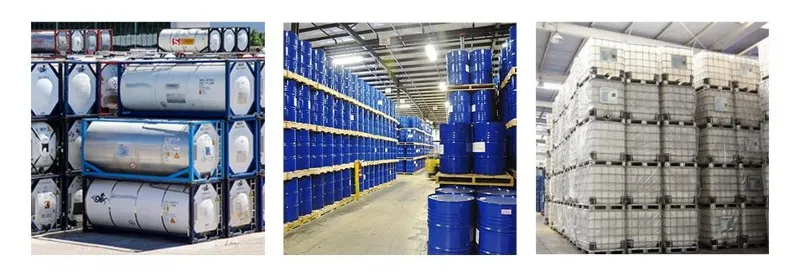
GNEE BIO Product Packaging
| Packaging Type | Net Weight |
|---|---|
| Steel Drum | 250 kg |
| IBC Tank | 1250 kg |
| ISO Tank | Bulk shipment |
Customer Visit
