


Quick Answer
Yes, ethyl acetate chemical (CAS 141-78-6) is toxic to humans, but the level of risk depends on the amount and duration of exposure. Compared to many industrial organic solvents, ethyl acetate has relatively low acute toxicity. However, inhalation of high concentrations of vapor, prolonged skin contact, ingestion, or repeated occupational exposure can cause irritation, central nervous system (CNS) depression, and other health problems. It is safe to use in industrial and laboratory environments only when handled in well-ventilated conditions with appropriate personal protective equipment (PPE).
What Is Ethyl Acetate Chemical?
Ethyl acetate (CAS No. 141-78-6, UN1173) is a colorless, highly flammable ester with a characteristic fruity odor. It is widely used as a solvent in coatings, inks, adhesives, pharmaceuticals, cosmetics, food flavorings, laboratory extraction, and coffee decaffeination.
Because of its widespread industrial and consumer applications, one of the most common questions is: Is ethyl acetate harmful to humans?
According to official guidance from OSHA, NIOSH, the New Jersey Department of Health (NJDOH), the European Chemicals Agency (ECHA), and Safety Data Sheets (SDS), ethyl acetate presents health hazards under excessive exposure, but it is not considered a highly toxic chemical when used appropriately.
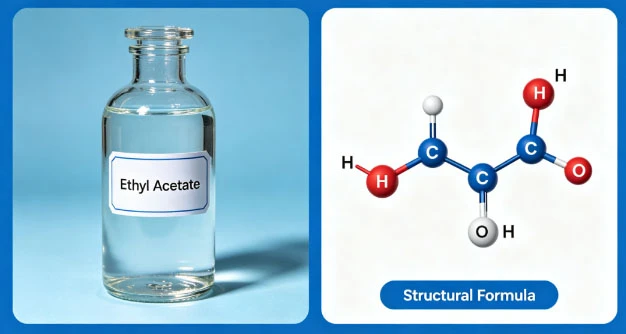
- Related Articles: What is Ethyl Acetate (CAS no. 141-78-6) and What Are Its Applications?
What are the properties of ethyl acetate?
| Property | Value |
|---|---|
| Chemical Formula | C₄H₈O₂ |
| Molecular Weight | 88.11 g/mol |
| Appearance | Colorless liquid |
| Odor | Sweet, fruity |
| Boiling Point | ~77.1°C |
| Melting Point | -83.6°C |
| Density (20°C) | ~0.90 g/cm³ |
| Flash Point | -4°C (closed cup) |
| Vapor Pressure | ~73 mmHg (20°C) |
| Solubility in Water | Slightly soluble (~8–9 g/100 mL) |
| Log Pow | ~0.73 |
| Evaporation Rate | High (fast-evaporating solvent) |
Key Properties Explained:
- High volatility: Evaporates rapidly at room temperature; increases the risk of inhalation exposure in poorly ventilated areas.
- Low boiling point: Makes EA an effective fast-drying solvent for coatings and adhesives.
- High flammability: Flash point is below room temperature, posing a fire hazard.
- Moderate polarity: Exhibits good dissolving power for resins, polymers, and organic compounds.
Is Ethyl Acetate Toxic?
Ethyl acetate is classified under the Globally Harmonized System (GHS) as:
- H225: Highly flammable liquid and vapor
- H319: Causes serious eye irritation
- H336: May cause drowsiness or dizziness
Repeated or prolonged skin contact may remove natural skin oils, resulting in dryness, cracking, or dermatitis.
Although ethyl acetate can affect human health when exposure is excessive, it is not classified as a human carcinogen by major regulatory organizations such as the International Agency for Research on Cancer (IARC), the U.S. National Toxicology Program (NTP), or the U.S. Environmental Protection Agency (EPA).
Health Effects of Ethyl Acetate Exposure
1. Inhalation
Inhalation is the most common route of exposure in workplaces. Low concentrations may cause mild irritation of the nose and throat, headache, and temporary dizziness. Higher concentrations may lead to drowsiness, reduced alertness, poor coordination, and central nervous system (CNS) depression.
Extremely high airborne concentrations in confined spaces may create serious health hazards and require immediate medical attention.
2. Eye Contact
Liquid ethyl acetate can cause eye irritation, redness, a burning sensation, and excessive tearing. If the chemical enters the eyes, flush them immediately with clean water for at least 15 minutes and seek medical advice if irritation continues.
3. Skin Contact
It is not readily absorbed through intact skin, but repeated contact removes the skin's natural protective oils. Possible effects include dry skin, redness, cracking, and contact dermatitis after prolonged exposure.
4. Ingestion
Accidental swallowing is uncommon but may cause nausea, vomiting, abdominal discomfort, and irritation of the digestive tract.
Long-Term Exposure
Repeated occupational exposure over months or years may contribute to chronic skin irritation and prolonged irritation of the respiratory tract if exposure is not adequately controlled.
Some studies suggest that prolonged excessive exposure may influence liver or kidney function in heavily exposed workers, although current evidence in humans remains limited, and major regulatory agencies do not classify ethyl acetate as a specific target organ toxicant under normal occupational exposure limits.
How to Reduce Exposure?
Safe handling practices include:
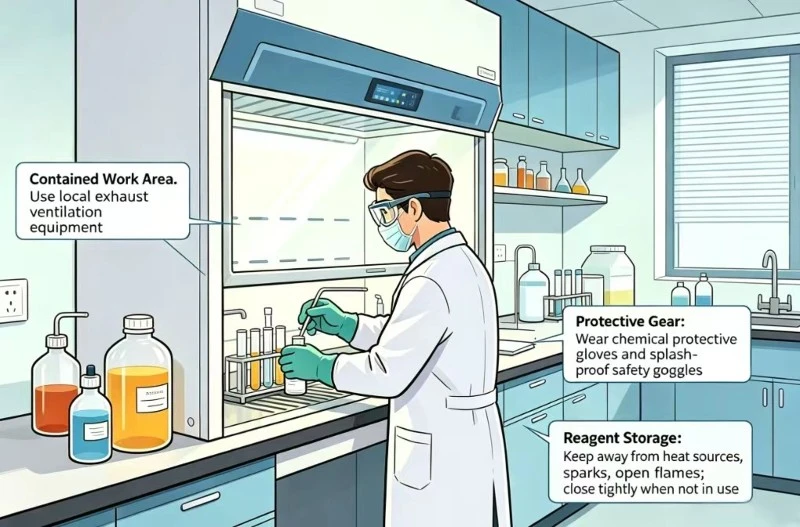
- Use local exhaust ventilation in enclosed work areas.
- Avoid breathing solvent vapors.
- Wear chemical-resistant gloves and splash-proof safety goggles.
- Store away from heat, sparks, and open flames.
- Keep containers tightly closed when not in use.
- Wash hands thoroughly after handling.
- In industrial environments, engineering controls should always be the primary method of exposure prevention, with PPE serving as additional protection.
First Aid Measures
- Inhalation: Move the person to fresh air immediately. Seek medical attention if symptoms persist.
- Eye Contact: Flush eyes with clean water for at least 15 minutes.
- Skin Contact: Remove contaminated clothing and wash thoroughly with soap and water.
- Ingestion: Do not induce vomiting. Rinse the mouth and obtain immediate medical attention.
Frequently Asked Questions
Q: What is ethyl acetate solvent used for?
Ethyl acetate solvent is commonly used as a solvent in coatings, inks, adhesives, nail polish removers, pharmaceuticals, and laboratory extraction.
Q: What does ethyl acetate chemical smell like?
It has a sweet, fruity odor often described as similar to pear drops or nail polish remover.
Q: What is the chemical formula of Ethyl ethanoate?
Its chemical formula is C4H8O2, and its CAS number is 141-78-6.
Q: What is the boiling point of ethyl acetate (CAS 141-78-6)?
The boiling point of ethyl acetate is approximately 77.1°C; therefore, it is a volatile solvent.
Q: Is ethyl acetate polar or nonpolar?
Ethyl acetate is moderately polar, which gives it good solvency for many organic compounds.
Q: Is ethyl ethanoate liquid flammable?
Yes. EA is a highly flammable liquid with a low flash point, which means its vapors can ignite easily at room temperature. It should be stored away from heat, sparks, open flames, and static discharge, and used only in well-ventilated areas.
Q: Is ethyl ethanoate harmful to the environment?
Ethyl acetate is generally considered readily biodegradable and has low bioaccumulation potential. However, large spills can still pose short-term risks to aquatic organisms and air quality. Proper containment, spill response, and waste disposal are important to minimize environmental impact.
Q: How should ethyl acetate be safely stored?
Ethyl acetate should be stored in a cool, dry, and well-ventilated area in tightly sealed containers, away from sources of ignition and incompatible substances. Due to its volatility and flammability, the storage area must comply with local fire regulations and chemical safety requirements.
Request details on ethyl acetate chemical
Conclusion
CAS No. 141-78-6 Ethyl acetate is not highly toxic, but it can cause health effects under excessive exposure conditions. With proper ventilation, PPE, and adherence to occupational exposure limits, it is safe for industrial and laboratory use.
About us
GNEE BIO, a member of the GNEE Group, is a professional chemical supplier specializing in the global supply of industrial chemicals, solvents, and chemical raw materials. We collaborate with qualified production partners to provide our customers with consistent product quality, highly competitive prices, and reliable international supply.
We provide complete technical documentation, including Certificates of Analysis (COAs), Safety Data Sheets (SDS), Technical Data Sheets (TDS), and customized export documents to ensure smooth international trade.
Other Hot-Selling Products
| Dimethyl Sulfoxide (DMSO) | CAS 67-68-5 |
| Dichloromethane / Methylene Chloride | CAS 75-09-2 |
| Glacial Acetic Acid / Ethanoic Acid | CAS 64-19-7 |
| Ethyl Acetate / Ethyl Ethanoate | CAS 141-78-6 |
| Ethylene Glycol / Monoethylene Glycol (MEG) | CAS 107-21-1 |
| Trichloroethylene | CAS 79-01-6 |
| Cyclohexanone | CAS 108-94-1 |
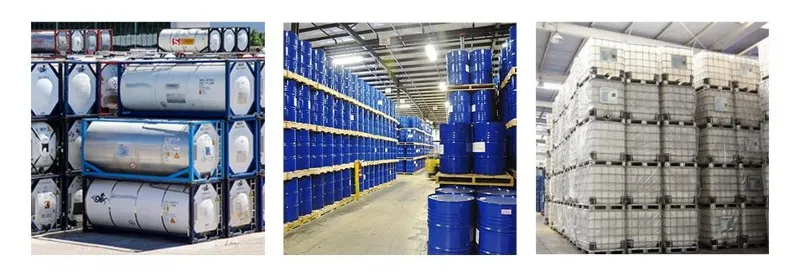
GNEE BIO Product Packaging
| Packaging Type | Net Weight |
|---|---|
| Steel Drum | 250 kg |
| IBC Tank | 1250 kg |
| ISO Tank | Bulk shipment |
Customer Visit
