


Overview
CAS No.141-78-6 Ethyl acetate (abbreviated ETAC / EA / EtOAc, IUPAC ethyl ethanoate) is a low-toxicity, fast-evaporating carboxylic ester solvent with molecular formula C₄H₈O₂. It is a colorless fruity-scented liquid, widely recognized as one of the most versatile eco-friendly industrial solvents, deployed across coatings, adhesives, printing, food processing, pharmaceuticals, semiconductors and lithium-ion battery manufacturing.
What Is Ethyl Acetate?
Ethyl acetate (CAS No. 141-78-6), also known as ethyl ethanoate or abbreviated as EA or EtOAc, is a low-toxicity, fast-evaporating organic ester solvent with the molecular formula C₄H₈O₂. It is a clear, colorless liquid with a characteristic fruity odor and is widely used across coatings, adhesives, printing, pharmaceuticals, food processing, electronics manufacturing and laboratory applications.
Thanks to its excellent solvency, rapid evaporation, and relatively low toxicity compared with many aromatic solvents, ethyl acetate is one of the world's most commonly used industrial solvents.
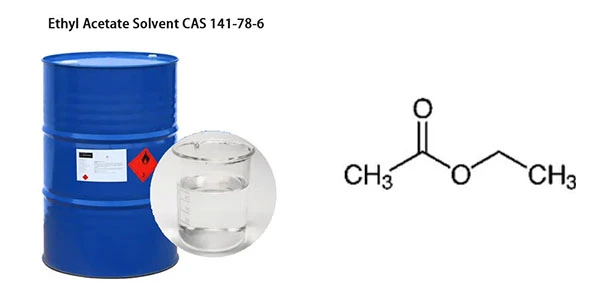
- Related Product: Ethyl Acetate (EA) CAS 141-78-6
Basic Information
| Chemical Name | Ethyl Acetate |
| IUPAC Name | Ethyl Ethanoate |
| CAS Number | 141-78-6 |
| EINECS Number | 205-500-4 |
| Molecular Formula | C₄H₈O₂ |
| Molecular Weight | 88.11 g/mol |
| Synonyms | EA, EtOAc, Acetic Acid Ethyl Ester |
- The CAS Registry Number 141-78-6 is assigned by the Chemical Abstracts Service (CAS) and is universally referenced by regulatory agencies worldwide, including EPA, ECHA (REACH), FDA and many national chemical inventories.
Physical and Chemical Properties
| Appearance | Clear, colorless liquid |
| Odor | Sweet, fruity |
| Boiling Point | 77.1°C |
| Melting Point | -83.6°C |
| Density (20°C) | Approximately 0.90 g/cm³ |
| Flash Point | -4°C |
| Water Solubility | Approximately 80 g/L (20–25°C) |
| Vapor Density | 3.0 (Air = 1) |
- Ethyl acetate is miscible with most common organic solvents, including alcohols, ketones, ethers and aromatic hydrocarbons. It dissolves nitrocellulose, acrylic resins, polyurethane resins and many other polymers used in industrial formulations.
- Under normal storage conditions it remains chemically stable. However, it can slowly hydrolyze in the presence of water, particularly under acidic or alkaline conditions, producing ethanol and acetic acid.
How Is Ethyl Acetate Manufactured?
Commercial production mainly uses two industrial processes:
1. Fischer Esterification
Acetic acid reacts with ethanol in the presence of an acid catalyst to produce ethyl acetate and water. This is the most widely used manufacturing route due to its mature technology and cost efficiency.
2. Tishchenko Reaction
Two molecules of acetaldehyde are converted directly into ethyl acetate using an aluminum alkoxide catalyst. This process offers high conversion efficiency and fewer by-products under suitable production conditions.
What Are the Industrial Applications of Ethyl acetate solvent?
1. Paints and Coatings
Ethyl acetate (CAS 141-78-6) is widely used in coatings, including automotive refinish, industrial maintenance, wood coatings, metal coatings and protective finishes. Its fast evaporation rate, strong solvency for acrylic, nitrocellulose and polyurethane resins, and low residue profile help formulators improve flow, leveling and film clarity while reducing drying time and surface defects. For manufacturers seeking a balance between application speed and finish quality, ethyl acetate is often selected as a key blending solvent in coating systems.
2. Adhesives and Sealants
In adhesive and sealant formulations, ethyl acetate functions as a fast-evaporating carrier solvent for polyurethane, acrylic, vinyl and rubber-based systems. It supports controlled viscosity adjustment during application and promotes rapid set time after coating or bonding. This makes it useful in packaging, footwear, laminates, labels and general assembly applications where customers need shorter production cycles, clean application and reliable bond strength.
3. Printing Inks
Flexographic, gravure and some screen printing inks use ethyl acetate because it dries quickly, dissolves common binder systems and leaves minimal residue on the printed substrate. Its evaporation profile helps printers maintain sharp image definition, consistent color development and high-speed press performance. In packaging and label printing, ethyl acetate is especially valuable when customers need fast ink set, reduced blocking and efficient solvent release during drying tunnels.
4. Pharmaceutical Manufacturing
Ethyl acetate solvent is commonly used in pharmaceutical processing as an extraction solvent, crystallization medium and purification aid for active pharmaceutical ingredients (APIs) and intermediates. It is classified as an ICH Class 3 residual solvent, which means it has relatively low toxicological concern when used within established limits. Because it combines effective solvency with favorable regulatory acceptance, ethyl acetate is often selected by pharmaceutical manufacturers seeking cleaner processing, easier solvent removal and compliance with global quality standards.
5. Food and Flavor Processing
In food and flavor applications, ethyl acetate is used under tightly controlled conditions for flavor extraction, decaffeination and ingredient purification. The U.S. FDA recognizes ethyl acetate as Generally Recognized As Safe (GRAS) for specified uses, and it is also referenced in food-processing regulations in multiple markets. For customers in the food and beverage sector, this makes ethyl acetate a practical choice when they need an efficient extraction solvent that can be removed readily and used in accordance with applicable food-grade requirements.
6. Electronics and Precision Cleaning
High-purity ethyl acetate is used for cleaning electronic components, printed circuit boards, optical parts and precision instruments where fast drying and low residue are critical. It helps remove oils, flux residues and certain organic contaminants without leaving heavy film or extended drying times.
Safety and Storage of Ethyl acetate chemical
CAS No.141-78-6 Ethyl acetate is classified as a GHS Category 2 Highly Flammable Liquid.
Primary hazards include:
- Highly flammable liquid and vapor
- Eye irritation
- Drowsiness or dizziness after prolonged inhalation of high vapor concentrations
According to OSHA, the permissible exposure limit (PEL) is 400 ppm (8-hour TWA). Adequate ventilation should always be provided during industrial use.
Store ethyl acetate chemical liquid in tightly sealed containers in a cool, dry and well-ventilated area away from heat, sparks, open flames and strong oxidizing agents. Carbon steel, stainless steel, aluminum and compatible solvent-resistant plastic containers such as HDPE are commonly used for storage and transportation.
- Related Article: Is Ethyl Acetate Toxic to Humans? Health Risks and Safety Guide
Ethyl Acetate/EA Solvent vs. Other Common Solvents
| Parameter | Ethyl Acetate | MEK | Toluene | Acetone |
|---|---|---|---|---|
| Boiling Point (°C) | 77.1 | 79.6 | 110.6 | 56.1 |
| Relative Evaporation Rate* | 4.1 | 3.8 | 2.0 | 5.6 |
| Water Solubility (20–25°C) | ~80 g/L | ~275 g/L | ~0.5 g/L | Miscible |
| Flash Point (°C) | -4 | -9 | 4 | -20 |
| ICH Residual Solvent Class | Class 3 | Class 3 | Class 2 | Class 3 |
- Relative evaporation rate is typically reported using n-butyl acetate = 1 as the reference.
Ethyl acetate solvent is often selected when you need a balanced solvent profile: strong solvency, moderate drying speed, relatively low toxicity, and broad regulatory acceptance.
Frequently Asked Questions (FAQs)
Q1: What is the CAS number of ethyl acetate?
A: The official CAS Registry Number of ethyl acetate is 141-78-6. Assigned by the Chemical Abstracts Service (CAS), this unique identifier is widely used by manufacturers, laboratories and regulatory agencies worldwide for chemical identification. The molecular formula is C₄H₈O₂, and its IUPAC name is ethyl ethanoate.
Q2: Is ethyl acetate the same as acetone?
A: No. Ethyl acetate is an ester, C₄H₈O₂, CAS 141-78-6 and acetone is a ketone, C₃H₆O, CAS 67-64-1,they are different chemical compounds with distinct physical and chemical properties. Ethyl acetate has a mild fruity odor, limited water solubility and excellent solvency for nitrocellulose, acrylic and many other resins, while acetone evaporates faster and is completely miscible with water.
Q3: Is ethyl acetate safe for food contact and food processing?
A: Yes. Ethyl acetate (CAS 141-78-6) is listed by the U.S. FDA as Generally Recognized As Safe (GRAS) for specified food-related applications and is permitted for use in accordance with applicable food regulations, including the Food Chemicals Codex (FCC) and China's GB 2760 standard. It is widely used in flavor extraction, coffee decaffeination and food ingredient processing under controlled manufacturing conditions.
Q4: What is the difference between industrial grade and ACS reagent grade ethyl acetate?
A: Both grades typically have a minimum purity of 99.5%, but ACS reagent grade applies much stricter limits on water content, heavy metals and residue after evaporation. Industrial grade is commonly used in coatings, adhesives and general manufacturing, while ACS reagent grade is preferred for pharmaceutical applications, analytical laboratories and other high-purity processes where trace impurities can affect product quality.
Q5: What modern industries use high-purity ethyl acetate?
A: High-purity ethyl acetate chemical is increasingly used in advanced manufacturing industries, including semiconductor cleaning and photoresist processing, pharmaceutical production, precision laboratory analysis, electronic component cleaning and specialty chemical synthesis. These applications require consistent solvent purity, low residue and reliable quality to support sensitive manufacturing processes.
Q6: Is ethyl acetate highly flammable?
A: Yes. It has a flash point of −4°C and is classified as a GHS Category 2 Highly Flammable Liquid. Because its vapors are heavier than air, they can accumulate in low-lying areas and may ignite if they encounter an ignition source. Proper ventilation, grounding of equipment and elimination of ignition sources are essential during storage, handling and transportation.
Conclusion
Ethyl acetate (CAS 141-78-6) is a low-toxic, fast-evaporating ester solvent with a fruity scent. It dissolves various resins and complies with global industry regulations.
EA solvent is widely used in coatings, adhesives, printing inks, cosmetics, food extraction, pharmaceutical synthesis, electronic cleaning, semiconductors and lithium battery manufacturing. Different purity grades match general production and high-precision industrial scenarios.
Packaging for the chemical solvents


About Us
GNEE BIO is a professional global industrial chemical supplier specializing in ester solvents, synthetic resins and fine industrial raw materials, with long-term cooperative factories and complete supply chains covering Asia, Europe, the Middle East and North America. Our core product lineup centers on ethyl acetate CAS 141-78-6, alongside butyl acetate, isopropanol and acetone, supplying consistent industrial-grade and high-purity ACS-grade products for coatings, pharmaceuticals, electronics, food processing and new energy manufacturing industries.
Beyond product supply, we provide customers with full supporting services including customized purity standards, COA certification, safe packaging & transportation schemes, storage guidance and solvent formulation consultation.
