

Monoethylene glycol (MEG), also known simply as ethylene glycol (CAS 107-21-1)-is one of the two fundamental monomers required for the production of polyethylene terephthalate (PET) resin. Without MEG, the PET we know so well-a material widely utilized in beverage bottles, food packaging, polyester fibers, and engineering plastics-would cease to exist.
However, why is MEG of such critical importance in the production of PET resin, to the exclusion of other diols?
The answer lies in its unique molecular structure, chemical reactivity, purity characteristics, and its capacity to construct highly stable, linearly aligned polymer chains that exhibit exceptional performance.
What Is MEG Mono Ethylene Glycol ?
Monoethylene Glycol, commonly abbreviated as MEG, is a colorless, odorless, and viscous organic compound with the chemical formula C₂H₆O₂. It is the simplest member of the ethylene glycol family, a group of diol compounds (i.e., compounds containing two hydroxyl groups, -OH). MEG is well known for its widespread use in the production of antifreeze, polyester fibers, and various other industrial applications.
Are Ethylene Glycol and Monoethylene Glycol the Same?
Yes, they are exactly the same compound. "Monoethylene glycol" is simply its precise chemical name, intended to distinguish it from related multi-unit compounds such as diethylene glycol (DEG) or triethylene glycol (TEG).

Basic Chemical Information
- Chemical Formula: C₂H₆O₂
- Boiling Point: 197°C
- Solubility: Completely miscible in water
- Viscosity: Provides stability and resistance under thermal stress
Because of these properties, MEG is not just a raw material; it's a performance enhancer that supports consistent yield and product reliability in high-volume production environments.
CAS 107-21-1 MEG Raw Material Supplier in China
How is MEG Used to Make PET Fibers?
PET (polyethylene terephthalate) is created via step-growth polymerization, where two core components react:
MEG (the diol component, monoethylene glycol)
PTA or DMT (the diacid component, purified terephthalic acid or dimethyl terephthalate)
Step 1:
Esterification (PTA Route)The first reaction combines PTA and MEG to form BHET, the key intermediate building block:
HOOC-C6H4-COOH + 2HOCH2CH2OH -> BHET + 2H2O
In this stage, purified terephthalic acid reacts with monoethylene glycol to produce bis-hydroxyethyl terephthalate (BHET), along with water as a byproduct. BHET acts as the foundation for the next polymerization step.
Step 2:
PolycondensationBHET then undergoes polycondensation to form the final PET polymer:
n BHET -> PET + n HOCH2CH2OH
During this critical phase:
Polymer chains extend and grow longer
MEG is released as a byproduct, which is typically recovered and recycled in industrial processes
The molecular weight of the polymer increases significantly
This step directly defines PET's final properties, including its mechanical strength and intrinsic viscosity (IV) - key metrics that determine its performance in fibers, bottles, and films.
Why MEG Is Chemically Perfect for PET Production
1. Bifunctional Structure Enables Linear Polymer Chains
At the molecular level, MEG (monoethylene glycol) has two reactive hydroxyl groups at either end of its structure. This allows it to bond with terephthalic acid on both sides, building long, straight polymer chains rather than branched structures.
This linear architecture is what gives PET its most sought-after properties:
High tensile strength
Excellent transparency
Controlled crystallinity
Superior fiber spinnability for textiles
2. Ideal Molecular Size for High Reaction Efficiency
MEG is one of the smallest glycols used in industrial polymer production, and this compact size brings key processing advantages:
- Faster diffusion in the molten polymer mixture
- Improved reaction kinetics throughout the process
- Lower energy barrier for the initial esterification step
- More efficient polycondensation
These benefits translate directly to higher reactor productivity, making large-scale PET manufacturing faster and more cost-effective.
3. High Purity Compatibility with Food-Grade PET
PET used for bottles and food packaging demands extremely pure raw materials, and MEG is no exception. Even minor impurities can lead to critical quality issues, including:
- Resin yellowing
- Acetaldehyde formation (which affects taste and odor)
- Reduced transparency
- Accelerated polymer degradation
For this reason, food-grade PET production requires high-quality MEG that meets strict specifications:
Very low water content
Controlled levels of diethylene glycol (DEG)
Minimal aldehyde impurities
High UV transmittance
Conclusion
MEG mono ethylene glycol is a vital chemical in the production of PET, contributing to the creation of durable and versatile polyester fibers and resins. The purity of MEG chemical plays a significant role in determining the quality of PET products, making it crucial for manufacturers to use high-purity materials to produce strong, clear, and reliable products for a wide range of industries.
About us
As a leading manufacturer and exporter of chemical solvent, TIANJIN GNEE BIOTECH CO., LTD. provides high-quality industrial chemicals. We supply to customers across the chemical, pharmaceutical, and materials industries, ensuring consistent quality, reliable logistics, and professional technical support.
Our chemical products hold international certifications (REACH, ISO, FMQS, HALAL) for global quality recognitio. We have warehouses in coreports such as Qingdao, Tianiin, and Shanghai, with a 15-day express delivery service.
Other Hot-Selling Products
| Dimethyl Sulfoxide (DMSO) | CAS 67-68-5 |
| Dichloromethane / Methylene Chloride | CAS 75-09-2 |
| Glacial Acetic Acid / Ethanoic Acid | CAS 64-19-7 |
| Ethyl Acetate / Ethyl Ethanoate | CAS 141-78-6 |
| Ethylene Glycol / Monoethylene Glycol (MEG) | CAS 107-21-1 |
| Trichloroethylene | CAS 79-01-6 |
| Cyclohexanone | CAS 108-94-1 |
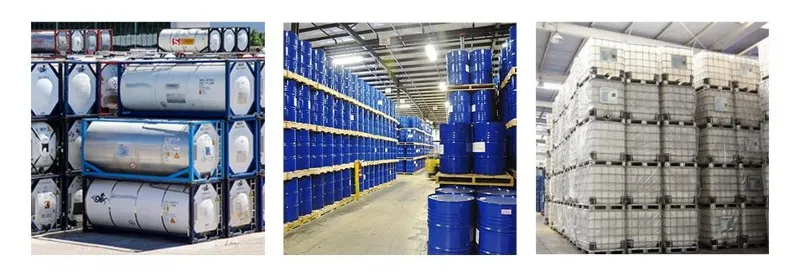
Gneebio Product Packaging
| Packaging Type | Net Weight |
|---|---|
| Steel Drum | 250 kg |
| IBC Tank | 1250 kg |
| ISO Tank | Bulk shipment |
Customer Visit
