


overview
Ethyl acetate (CAS 141-78-6), also known as ethyl ethanoate, is one of the most widely used organic esters in industrial and laboratory settings. As a colorless liquid with a characteristic sweet, fruity odor resembling pear drops, this compound serves as a versatile solvent across pharmaceuticals, coatings, food processing, electronics, and many other sectors.
Basic Information of Ethyl Acetate
What Is Ethyl Acetate?
Ethyl acetate, with the chemical formula C4H8O2, is a colorless liquid with a characteristic sweet, fruity odor. It belongs to the class of organic compounds called esters and is formed through the reaction of ethanol and acetic acid. Its non-toxic, biodegradable nature makes it an environmentally friendlier choice for many industrial applications.
| CAS No. | 141-78-6 |
| IUPAC Name | Ethyl ethanoate |
| Common Names | Ethyl acetate, acetic ester, vinegar naphtha, ethyl acetic ester |
| Molecular Formula | C₄H₈O₂ |
| Formula | CH₃COOC₂H₅ or CH₃COOCH₂CH₃ |
| Molecular Weight | 88.11 g/mol |
| EC Number | 205-500-4 |
What is the structure of ethyl acetate?
Ethyl acetate is formed by the esterification of acetic acid (CH₃COOH) and ethanol (C₂H₅OH). Its molecular structure consists of:
- An acetate group (CH₃COO-) derived from acetic acid
- An ethyl group (-C₂H₅) derived from ethanol
- A central ester linkage (-COO-) that defines its chemical class
The ester functional group is planar, with the carbonyl carbon double-bonded to one oxygen atom and single-bonded to the other, creating a moderately polar molecule that can dissolve both polar and nonpolar substances.

Request Full COA or free Ethyl Acetate liquid samples
What are the Physical Properties of Ethyl Acetate?
Key Physical Properties Summary:
| Property | Value | Conditions |
|---|---|---|
| Melting Point | -83.6°C (-118.5°F) | 1 atm |
| Boiling Point | 77.1°C (170.8°F) | 1 atm |
| Appearance | Colorless clear liquid | Room temperature |
| Odor | Sweet, fruity (pear-drop-like) | - |
| Density | 0.897–0.902 g/cm³ | 20°C |
| Vapor Pressure | Approximately 73 mmHg | 20°C |
| Flash Point | -4°C (25°F) | Closed cup |
| Autoignition Temperature | 427°C (801°F) | - |
| Refractive Index (n₂₀/D) | 1.3720 | 20°C |
| Viscosity | 0.426 mPa·s | 25°C |
What are the melting point and boiling point of ethyl acetate Chemical?
Ethyl acetate (also known as ethyl ethanoate or acetic ether) has a melting point of approximately -83.6°C (-118.5°F) and a boiling point of 77.1°C (171°F) at atmospheric pressure. Due to its wide liquid temperature range, ethyl acetate remains in a stable liquid state under normal room temperature conditions (approximately 20–25°C) and standard atmospheric pressure. These physical characteristics make it suitable for a wide range of industrial and laboratory solvent applications, including coatings, adhesives, extraction processes, and chemical synthesis.
The phase transition parameters of ethyl acetate are well-established and consistently reported in major chemical databases, safety data sheets (SDS), and industrial chemical reference sources.
Appearance and State at Room Temperature
Ethyl acetate is a colorless, transparent, highly flammable liquid with a characteristic sweet, fruity odor often described as pear-like or solvent-like. It has relatively fast evaporation characteristics due to its high vapor pressure, which makes it widely used in applications requiring quick drying performance.
Under normal atmospheric conditions, ethyl acetate exhibits low viscosity, good fluidity, and easy handling properties. These characteristics contribute to its extensive use as a solvent in paints, coatings, printing inks, adhesives, flavors and fragrances, pharmaceutical extraction, and laboratory applications.
What are the Density and Solubility of EA Chemical?
-
Density:
The density of ethyl acetate is approximately 0.897–0.902 g/cm³ at 20°C, which is lower than the density of water. This property allows ethyl acetate to form an upper organic phase during liquid-liquid extraction processes, making it suitable for separation and purification applications where low-density organic solvents are required.
-
Water Solubility:
Ethyl ethanoate has limited solubility in water, with a solubility of approximately 8.7 g per 100 mL of water at 20°C. Its partial miscibility with water enables the formation of separate organic and aqueous phases, which is particularly useful in solvent extraction, purification, and laboratory separation processes.
-
Solubility in Organic Solvents:
Ethyl acetate liquid shows excellent compatibility with many common organic solvents. It is miscible with solvents such as ethanol, acetone, ether, and chloroform, and demonstrates good solvent compatibility in various organic solvent systems. This property allows ethyl acetate to be widely used for solvent blending, organic synthesis, coatings formulation, and chemical processing.
-
Temperature Effect on Solubility:
Temperature changes can influence the mutual solubility between ethyl acetate and water. Variations in operating temperature may affect phase equilibrium and separation efficiency during extraction processes. Therefore, temperature control is an important factor in applications involving solvent recovery and liquid-liquid separation.

Request CAS 141-78-6 Information and Technical Support
What are the uses of ethyl acetate in industry?
CAS No 141-78-6 Ethyl acetate is a versatile solvent widely used across various industries, thanks to its excellent dissolving power, rapid evaporation rate, and good compatibility with a wide range of materials. It plays a significant role in sectors such as pharmaceutical manufacturing, food and beverages, paints and coatings, adhesives, and the production of plastics and artificial leather. From pharmaceutical formulation and extraction processes to coating applications, packaging adhesives, and industrial cleaning, ethyl acetate serves as a key solvent in diverse manufacturing workflows.
Applications of Ethyl Acetate in Pharmaceuticals
Ethyl acetate chemical is a widely used solvent in the pharmaceutical industry, it has good dissolving ability, moderate polarity, low residue, and good compatibility with many organic compounds. It is important in pharmaceutical manufacturing, especially in extraction, purification, formulation support, and laboratory analysis.
-
1. Active Pharmaceutical Ingredient (API) Extraction
One major use of ethyl acetate in pharmaceuticals is the extraction and purification of active pharmaceutical ingredients (APIs). Its selective solubility helps manufacturers separate target compounds from reaction mixtures or natural sources while keeping good product quality and purity.
-
2. Pharmaceutical Processing Solvent
Ethyl acetate EA solvent is also commonly used as a process solvent in pharmaceutical manufacturing. It helps dissolve organic compounds, supports chemical processing, and assists purification during the production of pharmaceutical intermediates and active ingredients.
-
3. Pharmaceutical Coatings and Film Formation
Ethyl acetate is used as a solvent in pharmaceutical coating applications, including polymer coatings for tablets and capsules. Its fast evaporation rate helps form smooth coating layers and supports controlled-release formulations when used with suitable coating materials.
-
4. Laboratory and Analytical Applications
In pharmaceutical laboratories, ethyl acetate is often used as an extraction solvent and sample preparation solvent for analytical methods such as chromatography.
These applications show the important role of ethyl acetate as a reliable pharmaceutical solvent for drug development, quality control, and manufacturing processes.

Role of Ethyl Acetate solvent in Coatings and Adhesives
Ethyl acetate solvent is used in coatings and adhesives due to its quick-drying properties, viscosity control, and strong bonding capabilities.
| Key Property | Details |
|---|---|
| Drying Performance | Fast evaporation supports quick drying and efficient production |
| Solvency | Effectively dissolves many resins, polymers, and coating materials |
| Viscosity Control | Helps adjust formulation viscosity for easier application |
| Adhesion Performance | Supports uniform bonding in adhesive formulations |
| Common Applications | Automotive coatings, furniture finishes, packaging adhesives, printing inks |

Utilization of Ethyl Acetate in the Food and Beverage Industry
Food-grade ethyl acetate is widely used in the food and beverage industry as a flavoring agent and extraction solvent. Due to its characteristic fruity aroma, it is used in flavor formulations for products such as beverages, confectionery, and fruit-flavored foods.
It is also commonly used in the decaffeination process of coffee and tea. As an extraction solvent, it helps remove caffeine while preserving much of the original flavor profile of the products.
With increasing demand for clean-label and naturally derived ingredients, ethyl ethanoate continues to be valued in food applications where approved quality standards and regulatory requirements are strictly followed.

Safety, Handling, and Storage
Health Hazards
- Inhalation: Inhalation of ethyl acetate causes irritation to the nose and throat; high concentrations may lead to dizziness, headache, drowsiness, or central nervous system depression.
- Skin contact: Causes mild irritation; prolonged contact may result in skin dryness and defatting dermatitis.
- Eye contact: Causes irritation, accompanied by tearing and redness; high concentrations may lead to corneal damage.
- Ingestion: Acute toxicity is low, but it may cause gastrointestinal irritation.
- Long-term exposure: There is no evidence indicating that ethyl acetate is carcinogenic. However, due to the solvent's defatting action, repeated skin contact may lead to dermatitis.

Personal Protective Equipment (PPE)
Wear chemical-resistant goggles or a face shield to protect your eyes.
Use nitrile or butyl rubber gloves when handling ethyl acetate.
Wear flame-resistant protective clothing or a lab coat.
Use respiratory protection if ventilation cannot keep vapor levels below exposure limits.
Engineering Controls
Handle ethyl acetate only in well-ventilated areas.
Use local exhaust ventilation for open handling operations.
Ground all equipment to prevent static electricity and ignition.
Safe Work Practices
Keep ethyl acetate away from heat, sparks, and open flames.
Avoid breathing vapors during handling.
Wash your hands thoroughly after use.
Do not eat, drink, or smoke in work areas.
Storage Requirements
Store ethyl acetate in tightly sealed, properly labeled containers.
Keep containers in a cool, dry, and well-ventilated storage area.
Maintain storage temperatures below 30°C (86°F).
Keep away from oxidizing agents, ignition sources, and incompatible chemicals.
Use explosion-proof electrical equipment in storage areas.
Ground and bond containers during transfer operations.
Frequently Asked Questions (FAQ)
Q1: What is the melting point of ethyl acetate?
A: The melting point (freezing point) of ethyl acetate is -83.6°C (-118.5°F) at standard atmospheric pressure. This extremely low value means ethyl acetate remains liquid under normal industrial operating conditions.
Q2: What is ethyl acetate also known as?
A: It has several common names and synonyms including: ethyl ethanoate (IUPAC name), acetic ester, vinegar naphtha, ethyl acetic ester, acetoxyethane, and ethyl ester of acetic acid. Its CAS registry number is 141-78-6.
Q3: Is ethyl acetate soluble in water?
A: EA is slightly soluble in water, approximately 8.3 grams dissolves in 100 mL of water at 20°C. However, it is fully miscible with most organic solvents including alcohols, ethers, ketones, and other esters.
Q4: How is ethyl acetate manufactured industrially?
A: Commercial ethyl acetate is manufactured using several industrial routes, including Fischer esterification of acetic acid and ethanol, ethanol dehydrogenation, and the Tishchenko process from acetaldehyde. The preferred technology depends on feedstock availability and regional manufacturing practices. In laboratories, it is typically synthesized through Fischer esterification with sulfuric acid catalyst.
Q5: Is ethyl acetate liquid flammable?
A: Yes, ethyl ethanoate is highly flammable. It has a flash point of -4°C (25°F), meaning it can form ignitable vapor-air mixtures at temperatures well below room temperature. Its flammability range in air is 2.2% to 11.5% by volume. Proper ventilation and ignition source control are essential when handling ethyl acetate.
Q6: What is the boiling point of ethyl acetate?
A: The boiling point of ethyl acetate is 77.1°C (170.8°F) at 1 atmosphere pressure. This relatively low boiling point contributes to its fast evaporation rate, making it ideal for applications requiring rapid drying such as coatings, inks, and cleaning agents.
Q7: Can ethyl acetate be hydrolyzed?
A: Yes, it readily undergoes hydrolysis. Under acidic conditions, it reversibly hydrolyzes to ethanol and acetic acid. Under basic conditions (saponification), the reaction is irreversible and produces ethanol plus an acetate salt (e.g., sodium acetate when using NaOH). This hydrolytic property also makes ethyl acetate readily biodegradable in the environment.
Q8: What is the difference between ethyl acetate and butyl acetate?
A:
| Property | Ethyl Acetate | Butyl Acetate |
|---|---|---|
| Boiling Point | 77.1°C | 126°C |
| Evaporation Rate | Fast | Slow |
| Water Solubility | ~8.3 g/100mL | ~0.7 g/100mL |
| Solvency Strength | Balanced | Good for slower systems |
| VOC Classification | Yes | Yes |
Conclusion
Ethyl acetate (CAS 141-78-6) stands as one of the most important industrial solvents in modern chemical manufacturing. With a melting point of -83.6°C and boiling point of 77.1°C, it remains liquid under normal industrial operating conditions, while its moderate polarity delivers exceptional solvency for both polar and nonpolar materials.
From pharmaceutical extraction and food decaffeination to industrial coatings and flexible packaging adhesives, ethyl acetate's diverse applications stem from its unique combination of physical properties, chemical reactivity, and relatively low acute toxicity when handled appropriately.
Related Posts
About us
Tianjin Gnee Biotech Co., Ltd. (Brand: GNEE BIO), a member of the GNEE Group, is a professional supplier and global exporter of industrial solvents and chemical raw materials. Founded in 2016 and headquartered in Anyang, Henan, China, we have over 10 years of experience in the chemical trading industry. Through long-term strategic partnerships with qualified manufacturers, we provide stable supply, consistent product quality, and reliable sourcing solutions for customers worldwide.Our products are widely used across industries such as pharmaceuticals, cosmetics, electronics, life sciences, paints and coatings, adhesives, and chemical manufacturing, helping meet diverse application needs.
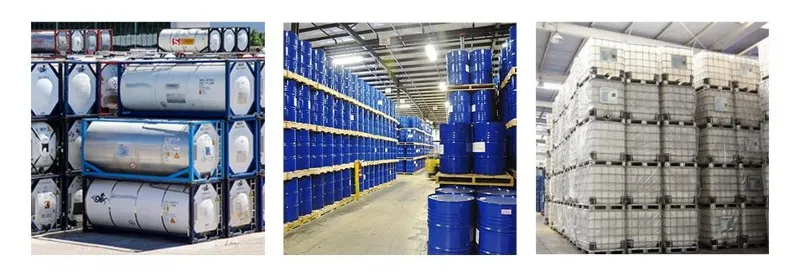
GNEE BIO Product Packaging
| Packaging Type | Net Weight |
|---|---|
| Steel Drum | 250 kg |
| IBC Tank | 1250 kg |
| ISO Tank | Bulk shipment |
Customer Visit
