

Why Is Glacial Acetic Acid Called "Glacial"?
Pure acetic acid is commonly known as glacial acetic acid. This name derives from its unique physical property: it solidifies into ice-like crystals at temperatures slightly below room temperature.
Acetic acid (CH3COOH) is the common name for ethanoic acid. As an organic compound, it has a pungent odor and sour taste-characteristics similar to vinegar, the main component of which is diluted acetic acid.
Acetic acid with extremely low water content (less than 1%) is called anhydrous acetic acid, also known as glacial acetic acid. It solidifies into crystals at approximately 16.6°C, resembling ice cubes or glacial ice, hence the name "glacial acetic acid." Removing water impurities from acetic acid stabilizes its melting point at this low temperature.
Glacial acetic acid can be purified by slowly flowing diluted acetic acid through solidified acetic acid crystals. Just as glaciers encase pure freshwater in seawater, pure acetic acid adheres to the solid crystal layer, while impurities remain in the liquid solution and are separated.
Additional Information
Acetic acid is a weak acid due to the ionization of the hydrogen atom in its carboxyl group, releasing a hydrogen proton. It is classified as a monoprotic weak acid with a pKa value of 4.76 in aqueous solution.
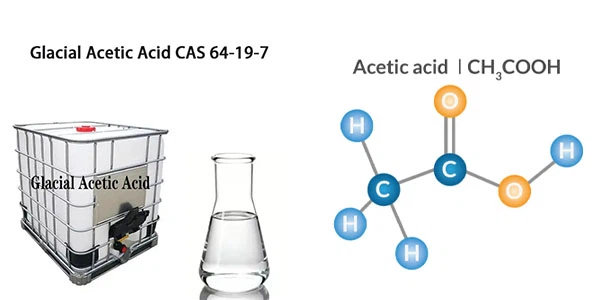
What Is Glacial Acetic Acid Used for in Industry?
Chemical Synthesis
As a basic building block, glacial acetic acid (CAS 64-19-7) is a major precursor in the production of vinyl acetate monomer (VAM), used in paints, adhesives, and coatings. It can also be converted into acetic anhydride and various acetate esters.
Plastics and Polymers
GAA is an essential raw material for the production of polyethylene terephthalate (PET), a polymer widely used in the production of plastic bottles and food packaging.
Textiles and Dyeing
The textile industry utilizes it for color fixing, pH adjustment, and enhancing color brightness and stability during fabric finishing.
Pharmaceuticals
Acetic acid (Glacial) acts as both a reaction solvent and a catalyst, playing a crucial role in the synthesis of active pharmaceutical ingredients (APIs), including drugs such as vitamins, hormones, and aspirin.
Food and Beverages
When diluted, it is used in the food industry as the food additive E260. It is used in products such as pickles, juices, and marinades as an acidity regulator, flavoring agent, and antibacterial preservative.
Cleaning and Disinfection
Because it is non-toxic when used at safe concentrations, it can be used as a highly effective industrial descaling agent, disinfectant, and surface cleaner, suitable for food processing and medical equipment.
Electronics and Agriculture
CAS 64-19-7 Glacial acetic acid is used in the electronics industry, such as for etching and cleaning circuit boards; it is also used in agriculture, such as for formulating specific herbicides and pesticides.
Industrial and Food Grade Acetic Acid Supplier
about us
As a leading manufacturer and exporter of chemical solvent, TIANJIN GNEE BIOTECH CO., LTD. provides high-quality industrial chemicals. We supply to customers across the chemical, pharmaceutical, and materials industries, ensuring consistent quality, reliable logistics, and professional technical support.
Our chemical products hold international certifications (REACH, ISO, FMQS, HALAL) for global quality recognitio. We have warehouses in coreports such as Qingdao, Tianiin, and Shanghai, with a 15-day express delivery service.
Other Hot-Selling Products
| Dimethyl Sulfoxide (DMSO) | CAS 67-68-5 |
| Dichloromethane / Methylene Chloride | CAS 75-09-2 |
| Glacial Acetic Acid / Ethanoic Acid | CAS 64-19-7 |
| Ethyl Acetate / Ethyl Ethanoate | CAS 141-78-6 |
| Ethylene Glycol / Monoethylene Glycol (MEG) | CAS 107-21-1 |
| Trichloroethylene | CAS 79-01-6 |
| Cyclohexanone | CAS 108-94-1 |
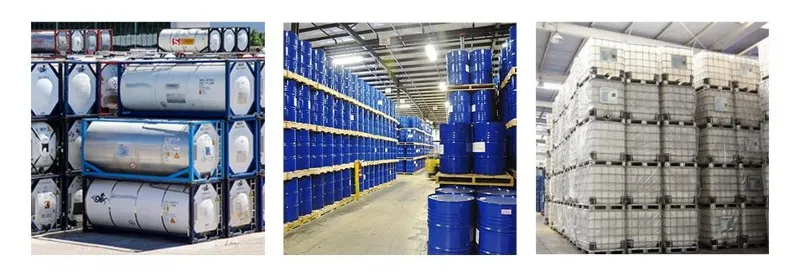
Gneebio Product Packaging
| Packaging Type | Net Weight |
|---|---|
| Steel Drum | 250 kg |
| IBC Tank | 1250 kg |
| ISO Tank | Bulk shipment |
Customer Visit
