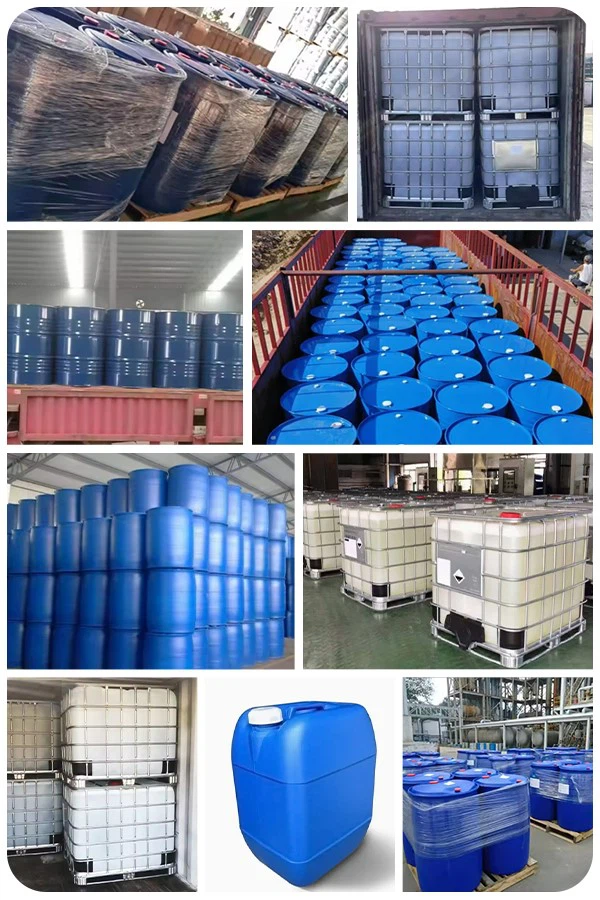
Acetonitrile (CAS 75-05-8) is a widely used polar aprotic solvent. It is primarily used in pharmaceuticals, lithium battery manufacturing, and other applications.
In this article, I will share some common applications of acetonitrile (ACN Solvent) .
What is Acetonitrile CAS 75-05-8 solvent?
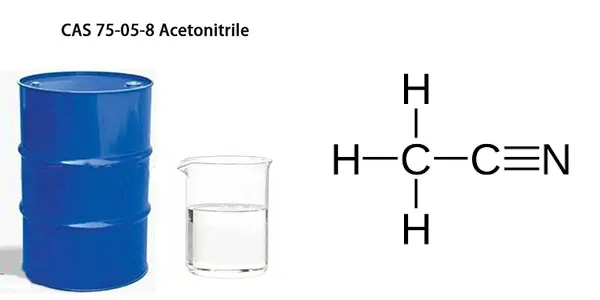
Acetonitrile (chemical formula CH₃CN), also known as methyl cyanide (MeCN) or cyanomethane, is a versatile polar aprotic solvent with CAS number 75-05-8. It is a colorless, volatile liquid, indispensable in numerous industries due to its excellent solvent properties.
Properties of Acetonitrile CAS 75-05-8:
|
Properties |
|
|
Chemical formula |
C2H3N |
|
Molar mass |
41.053 g·mol−1 |
|
Appearance |
Colorless liquid |
|
Odor |
Faint, distinct, fruity |
|
Density |
0.786 g/cm3 at 25°C |
|
Melting point |
−46 to −44 °C; −51 to −47 °F; 227 to 229 K |
|
Boiling point |
81.3 to 82.1 °C; 178.2 to 179.7 °F; 354.4 to 355.2 K |
|
Solubility in water |
Miscible |
|
log P |
−0.334 |
|
Vapor pressure |
9.71 kPa (at 20.0 °C) |
|
Henry's law |
530 μmol/(Pa·kg) |
|
Acidity (pKa) |
25 |
|
UV-vis (λmax) |
195 nm |
|
Absorbance |
≤0.10 |
|
Magnetic susceptibility (χ) |
−28.0×10⁻⁶ cm3/mol |
|
Refractive index (nD) |
1.344 |
Want to know more about the properties and specifications of acetonitrile? Contact us!
The Industrial Uses of Acetonitrile (ACN Solvent)
1. Pharmaceutical Industry: The Main Applications of ACN Solvent
Acetonitrile solvent plays a crucial role in pharmaceutical production, serving as both a reaction solvent and a purification agent.
- Active Pharmaceutical Ingredient (API) Synthesis: Acetonitrile solvent is used as a solvent in the production of key APIs, including vitamin B₁, metronidazole derivatives, ethambutol, pyrimethamine, and various anticancer and antiviral drugs.
- Purification and Crystallization: It is the solvent of choice for the recrystallization of steroidal compounds, antibiotics, and other bioactive substances.
- Pharmaceutical Formulation: ACN solvent is indispensable in drug formulation development and stability studies.
2. Analytical Chemistry: High-Performance Liquid Chromatography Solvent
CAS 75-05-8 Acetonitrile is the standard solvent for high-performance liquid chromatography (HPLC), and one of its most important applications is:
- Acetonitrile uses in HPLC : it's low UV absorption, high eluting power, and ability to form homogeneous mixtures with water make it the solvent of choice for reversed-phase HPLC separation. HPLC acetonitrile undergoes special purification to remove impurities that may interfere with analytical results.
- Other analytical techniques: Acetonitrile ACN can be used as a solvent and injection medium in gas chromatography (GC), as well as in spectroscopic methods such as visible spectroscopy, nuclear magnetic resonance (NMR), and infrared spectroscopy (IR). It is also used for sample preparation, extraction, and purification in food, environmental, and pharmaceutical testing.
3. Petrochemical Industry: Extractive Distillation Separation of C4 Hydrocarbons
- Butadiene Extraction: Acetonitrile chemical can separate 1,3-butadiene from C4 hydrocarbon fractions produced by naphtha vapor cracking.
4. Electronics Industry: Lithium-ion Battery Electrolytes and Semiconductor Manufacturing
- Lithium-ion Battery Electrolytes: Acetonitrile liquid, as a co-solvent in electrolyte formulations, improves ionic conductivity and thermal stability, thereby improving battery performance and safety.
- Semiconductor Cleaning: ACN solvent is used for precision cleaning and degreasing of electronic components and semiconductor wafers. Its volatility ensures no residue after evaporation.
5. Organic Synthesis and Specialty Chemicals Production
- Chemical Intermediate: Acetonitrile (CAS 75-05-8) can be used as a starting material for the production of a variety of chemicals, including acetamide hydrochloride, malononitrile (through reaction with cyanogen chloride), ethylamine, and acetic acid.
- Fine Chemicals and Agrochemicals: ACN solvent is used in the synthesis of pesticides, as well as specialty chemicals such as fragrances and dyes.
6. Other Industrial Applications
- DNA/RNA Synthesis
- Textile and Fiber Industry
- Fatty Acid Extraction
Storage of Acetonitrile chemical
- Environmental Sensitivity Control: Acetonitrile liquid is sensitive to light and high temperatures and must be kept away from direct sunlight to prevent physical degradation.
- Temperature Requirements: Classified as a Group IB flammable liquid, it must be stored below 23°C (73°F).
- Packaging and Storage Location: In accordance with OSHA regulations, acetonitrile should be stored in sealed metal containers, and all stock should be placed in fume hoods.
- Ventilation Management: Continuous mechanical ventilation is crucial to reduce vapor buildup and eliminate flammable and explosive catalysts.
- Fire and Hazard Prevention: Large-volume storage presents a significant flammability risk. A professional temperature control system helps maintain chemical stability, prevent exposure to toxic substances, and eliminate fire hazards.
- Leakage and Contamination Protection: Storage cabinets should be equipped with bottom leak control systems to prevent leaks and environmental contamination.
- Professional Support: Please contact Gneebio (professional supplier) for customized safe storage solutions for bulk acetonitrile and other flammable liquids.
Contact Us:
Email: sales@gneebio.com
Website: https://www.gneebio.com/inquiry
Our company
TIANJIN GNEE BIOTECH CO., LTD. is a professional chemical raw materials supplier. We have passed quality system certification and have self-managed import and export rights. Our products are popular with customers. As a leading global supplier, we deliver certified chemical raw materials that comply with REACH, RoHS, ISO and other international standards. Our robust monthly production capacity ensures consistent quality and a reliable supply for bulk orders.