

Overview
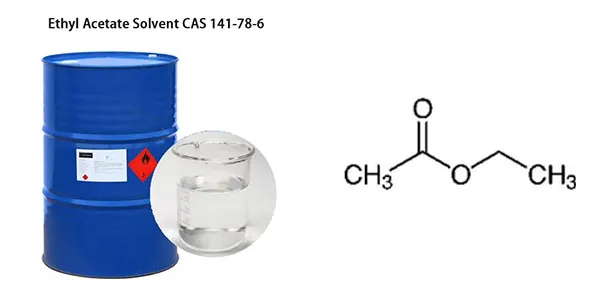
Ethyl acetate (CAS 141-78-6, also known as EtOAc or EA) is a moderately polar organic solvent; this characteristic enables its use in fields such as coatings, pharmaceuticals, chemical synthesis, food flavoring extraction, and laboratory chromatography. Combining advantages such as rapid volatility, strong solvency, relatively low toxicity, and ease of recovery, it is one of the most widely used industrial solvents globally.
What Is Ethyl Acetate Solubility In Water?
Ethyl acetate (EtOAc) is a colorless, fruity-scented ester widely used as a fast-evaporating, versatile solvent.
Ethyl acetate chemical has a slight solubility in water, with a solubility of approximately 8.3 g/100 mL (8.3% w/w) at 20°C. It is characterized as slightly soluble in water, but it can dissolve up to 3% water at room temperature. Its solubility increases at higher temperatures and it is highly soluble in common organic solvents.
| Properties of Ethyl Acetate chemical CAS 141-78-6 | |
| Boiling Point | 77.1 °C (171 °F) |
| Molecular Weight | 88.11 g/mol |
| Density (at 20 °C) | 0.902 g/cm³ |
| Melting Point | -83.6 °C (-118.5 °F) |
| Solubility | Partially soluble in water; fully miscible with organic solvents |
| Hydrolysis | Reacts with strong acids/bases to form ethanol and acetic acid |
| Combustibility | Combustible in air; produces carbon dioxide and water |
For more information on Ethyl Acetate Solvent, please contact us.
Why Is Ethyl Acetate Only Moderately Soluble in Water?
The chemical structure of ethyl acetate determines its limited solubility in water.
- Polar ester groups can form weak hydrogen bonds with water molecules, thus allowing ethyl acetate to dissolve to some extent in water.
- Nonpolar alkyl chains repel water molecules. This hydrophobic effect prevents complete miscibility between the solvent and water.
- Ethyl acetate does not contain hydroxyl groups. Due to the lack of hydrogen bond donors, it cannot bind tightly to water, which keeps its solubility at a moderate level.
Understanding Ethyl Acetate Solubility
Although ethyl acetate chemical is only slightly soluble in water (approximately 8–9 g/100 mL at 20 °C), it is completely miscible with many organic solvents such as ethanol, acetone, ether, benzene, and chloroform.
This balance between limited water solubility and excellent organic solvency makes ethyl acetate particularly useful in:
- Liquid-liquid extraction
- Pharmaceutical purification
- Organic synthesis
- Chromatography
- Natural product extraction
Because it forms a separate organic phase when mixed with water, EtOAc is commonly selected as an extraction solvent in laboratories and industrial processes.
Applications of Ethyl Acetate Chemical
| Category | Description / Uses |
| Industrial Solvent | Ethyl Acetate/EA Solvent is used for coatings, adhesives, ethyl cellulose, artificial leather, linoleum colorants, artificial fibers, and other industrial products. |
| Adhesive & Ink Production | Ethyl Acetate Chemical is used in the production of printing inks and artificial pearls. Acts as an extraction agent in pharmaceuticals, organic acids, and related products. |
| Raw Material for Spices | Key raw material for creating pineapple, banana, strawberry, and other fruit essences, as well as whiskey, cream, and other flavorings. Used for manufacturing spices, blended flavors, and artificial essences for liquor. |
| Extractant | Capable of extracting various compounds (phosphorus, tungsten, arsenic, cobalt) from aqueous solutions. |
| Organic Solvent | Serves as a reference substance for calibrating thermometers in sugar separation processes. |
| Cleaning Agent | Used as a cleaning agent in the textile industry and as an extractant for natural spices. |
| Pharmaceutical Raw Material | An important raw material in pharmaceuticals and organic synthesis. |
Ethyl Acetate Industrial Solvent CAS 141-78-6
Why Is Ethyl Acetate So Popular as an Industrial Solvent?
CAS 141-78-6 Ethyl acetate has become one of the world's most widely used solvents because it offers an excellent balance of performance, safety, and cost.
Key advantages include:
- Moderate polarity capable of dissolving numerous organic compounds
- Rapid evaporation for shorter drying times
- Lower toxicity than many chlorinated solvents
- Pleasant fruity odor compared with aromatic solvents
- Easy recovery by distillation
- Readily biodegradable under appropriate environmental conditions
- Available in industrial, pharmaceutical, food, and electronic grades
These characteristics make ethyl acetate suitable for coatings, adhesives, pharmaceuticals, extraction, electronics cleaning, and laboratory applications.
Safety information
Potential Health Hazards
- Inhalation can cause dizziness and irritation.
- Prolonged exposure may affect the respiratory and nervous systems.
Best Practices for Safe Handling and Storage
- Store in cool, ventilated areas away from heat and flames.
- Use proper personal protective equipment (PPE) during handling.
Frequently Asked Questions About Ethyl Acetate
Q: What is ethyl acetate solvent mainly used for?
A: Ethyl acetate is primarily used as a solvent in paints, coatings, adhesives, printing inks, pharmaceuticals, chemical synthesis, food flavor extraction, and laboratory applications. Its moderate polarity, fast evaporation rate, and excellent solvency make it suitable for dissolving resins, oils, polymers, and many organic compounds. It is also widely used as an extraction solvent and as the mobile phase in chromatographic analysis.
Q: Is ethyl acetate soluble in water?
A: Ethyl acetate is only slightly soluble in water, with a solubility of approximately 8–9 g per 100 mL at 20 °C. However, it is completely miscible with many organic solvents, including ethanol, acetone, ether, and chloroform. Its limited water solubility allows it to form a separate organic layer, making it highly effective for liquid-liquid extraction.
Q: Is ethyl acetate a polar or nonpolar solvent?
A: Ethyl ethanoate is classified as a moderately polar (polar aprotic) solvent. It has a dielectric constant of about 6 and contains a polar ester functional group, allowing it to dissolve a broad range of organic compounds while remaining only slightly soluble in water. This balance of polarity makes it one of the most versatile solvents used in laboratories and industrial production.
Q: Is ethyl acetate a safe solvent?
A: Compared with many industrial solvents, ethyl acetate EtOAc is considered to have relatively low acute toxicity when handled correctly. However, it is a highly flammable liquid and prolonged exposure to high vapor concentrations may cause eye irritation, dizziness, or respiratory discomfort. Proper ventilation, appropriate personal protective equipment (PPE), and compliance with the product Safety Data Sheet (SDS) are recommended during handling and storage.
Q: What is the boiling point of ethyl acetate, and why is it important?
A: Ethyl acetate has a boiling point of approximately 77.1 °C (170.8 °F). This relatively low boiling point enables rapid solvent evaporation after coating, extraction, or chemical synthesis, reducing drying time and improving production efficiency. It also facilitates solvent recovery through distillation in industrial processes.
about us
As a leading manufacturer and exporter of chemical solvent, GNEE BIO provides high-quality industrial chemicals. We supply to customers across the chemical, pharmaceutical, and materials industries, ensuring consistent quality, reliable logistics, and professional technical support.
Our chemical products hold international certifications (REACH, ISO, FMQS, HALAL) for global quality recognitio. We have warehouses in coreports such as Qingdao, Tianiin, and Shanghai, with a 15-day express delivery service.
Other Hot-Selling Products
| Dimethyl Sulfoxide (DMSO) | CAS 67-68-5 |
| Dichloromethane / Methylene Chloride | CAS 75-09-2 |
| Glacial Acetic Acid / Ethanoic Acid | CAS 64-19-7 |
| Ethyl Acetate / Ethyl Ethanoate | CAS 141-78-6 |
| Ethylene Glycol / Monoethylene Glycol (MEG) | CAS 107-21-1 |
| Trichloroethylene | CAS 79-01-6 |
| Cyclohexanone | CAS 108-94-1 |
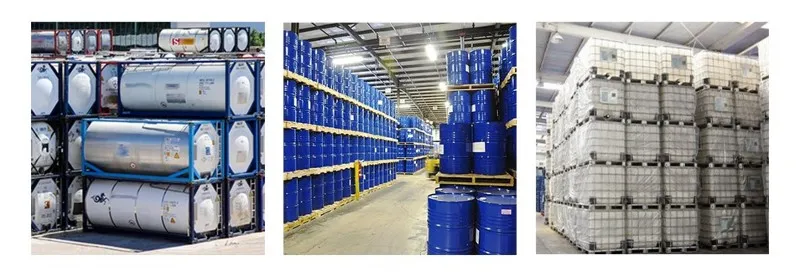
GNEE BIO Product Packaging
| Packaging Type | Net Weight |
|---|---|
| Steel Drum | 250 kg |
| IBC Tank | 1250 kg |
| ISO Tank | Bulk shipment |
Customer Visit